Investing in a property is a lifelong commitment, and it is essential to safeguard such an asset against accidents or unfortunate events. Any form of mechanical damage—or even a minor fire incident—can inflict irreparable harm upon the property. This is where property insurance comes into play; it serves as a means to obtain financial compensation for any potential losses. Read on to learn more!
What is Property Insurance?
Understanding the fundamentals of property insurance is essential for both property owners and tenants. The scope of property insurance encompasses a variety of policies specifically designed to provide financial protection to property owners.
These policies safeguard the property against risks such as theft, damage, or legal liability. In addition to protecting the physical structure of the building, property insurance coverage also extends to third parties who may sustain injuries while on the insured premises.
Typically, private property is protected under homeowners’ or renters’ insurance policies, whereas businesses may opt for commercial property coverage. This coverage protects assets—such as buildings, machinery, and inventory—against unforeseen risks.
In essence, insurance is a vast and versatile field that adapts to meet the specific needs of both businesses and individuals. For precisely this reason, it has become a vital cornerstone of financial security.
Importance of property insurance
Here are some key reasons why insurance is essential:
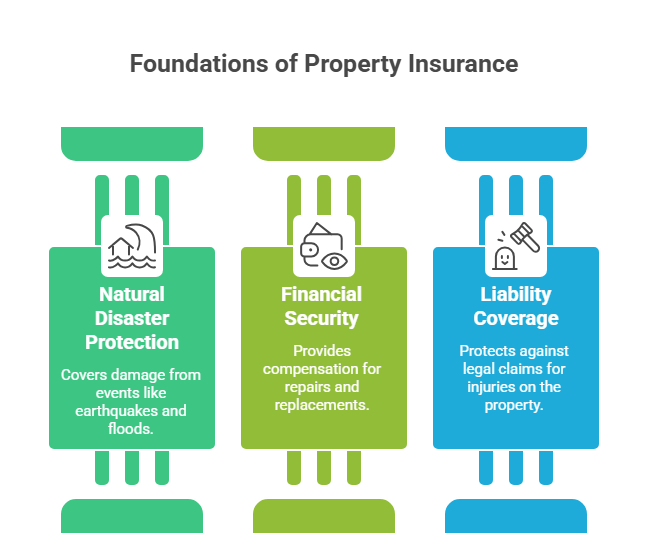
Protection Against Natural Disasters: Property insurance covers damage caused by natural disasters such as earthquakes, floods, and cyclones. This is particularly important in a country like India, where the likelihood of such disasters occurring is high.
Financial Security: In the event of any loss or damage to the property, property insurance provides financial compensation to cover the costs of repairs or replacement. This helps property owners avoid a heavy financial burden.
Liability Coverage: Property insurance also includes liability coverage, which protects property owners against legal claims in the event that someone sustains an injury on their property.
Property insurance: Types
There are five main types of insurance available:
Renter’s property insurance
This is essential for individuals living in rented accommodation. Tenants’ property insurance provides protection for personal belongings against theft, fire, and other disasters. The premium for this insurance is determined based on the value of the items being insured.
Commercial property insurance
This insurance is specifically designed for businesses and provides coverage for buildings, equipment, inventory, and other assets. It offers protection against risks such as fire, natural disasters, theft, and vandalism. The premium for commercial property insurance is determined based on the value of the insured property and the level of risk associated with the business.
Home property insurance
This is essential for homeowners, as it protects their property and belongings against various types of hazards. This includes damages resulting from fire, natural disasters, theft, and other risks. The premium for home insurance is determined based on factors such as the value of the property, its location, and the method of construction.
Property fire insurance
This specifically covers damage caused by fire. It provides financial protection to property owners against losses resulting from fire. The premium for this insurance depends on the value of the property and the level of fire risk associated with its location.
Public liability insurance
This type of property insurance is essential for property owners who may face legal claims arising from injury or damage sustained by a third party on their premises. This coverage encompasses legal expenses as well as compensation claims. The premium for Public Liability Insurance is determined by factors such as the size of the property and the nature of the business being conducted there.
What Is the Difference Between Homeowners Insurance and Property Insurance?
Generally, homeowners insurance provides financial coverage for liability claims and for damage to the property or personal belongings resulting from various types of losses. Property insurance, on the other hand, is a broader term that encompasses various types of policies, such as coverage for damage caused by floods, earthquakes, and storms. Property and Casualty insurance includes the aforementioned categories of property insurance, as well as policies ranging from commercial general liability to mortgage insurance.
What Are the Main Categories Covered Under a Homeowners Insurance Policy?
A standard homeowners insurance policy covers the following: damage to the physical structure of the home; loss or theft of personal property; liability coverage in case someone is injured on your property and sues you; medical expenses for the injured person; and additional living expenses if you are required to stay away from your home during repairs following a covered event.
What Is Not Covered by Property Insurance?
Generally, damage caused by the age of the home or normal wear and tear is not covered under property insurance. Depending on the policy, damage caused by mold and pests may also not be covered.
Is Property Insurance Mandatory?
No law compels you to insure your property. However, banks and other mortgage-lending institutions typically stipulate that you must keep your property insured for as long as your loan remains outstanding. Nevertheless, if you are the sole owner of your home, ‘Homeowners Insurance’ is an excellent tool for protecting yourself against potential financial losses.
Eligibility criteria for buying a property insurance policy
Before purchasing a property insurance policy, it is essential to understand the eligibility criteria established by the insurers. Here are some key points to consider:
- Property Ownership: To purchase property insurance, you must be the legal owner of the commercial building, residential home, or vacant land in question.
- Property Type: Property insurance policies vary based on the type of property (detached house, apartment, office space, or industrial property). Therefore, ensure that the policy specifically covers your particular type of property.
- Property Value: Insurance companies establish minimum value criteria for a property in order to issue an insurance policy.
- Property Condition: The condition of the property is assessed prior to issuing a policy to ensure that there are no inherent risks involved.
- Location: Insurance premiums are higher for properties situated in high-risk zones—such as areas prone to earthquakes or floods.
- Documentation: To apply for a policy, specific documents—such as proof of ownership, proof of identity, and proof of address—are required.
- Financial Stability: A strong credit history and a high CIBIL score can help you secure better premium rates for your policy.
- Property Age: Older properties generally carry higher risks and often require more comprehensive insurance coverage.
- Past Claims History: A history of frequent claims can impact an applicant’s eligibility to obtain an insurance policy.
The Bottom Line
Property insurance is a broad term that encompasses policies such as homeowners, renters, flood, and earthquake insurance. These coverages provide compensation to property owners for the loss of personal belongings, physical damage to buildings, and liability coverage. Property insurance can also provide financial compensation to renters in the event of loss or theft.
Read more: Possession Delay in Real Estate: Homebuyer Rights & Legal Remedies