

IAY, the Indira Awaas Yojana, was a popular housing scheme of the 1990s. Before the government shifted its focus to large-scale and affordable housing schemes, IAY covered all aspects of mass housing programs. It was one of the largest and most popular housing schemes of its time. Launched in 1985 by Rajiv Gandhi, the Indira Awaas Yojana, which is the full form of IAY, was introduced to provide affordable housing solutions to India’s rural population. The objectives, vision, and approach of IAY are now being carried forward in a more focused manner by the Pradhan Mantri Awaas Yojana or PMAY.
Since independence, several subsidy and housing construction assistance schemes have been prevalent in India. However, in 1985, a targeted scheme was formulated for the upliftment of Scheduled Castes, Scheduled Tribes, and other backward classes, which resulted in the formation of IAY or the Indira Awaas Yojana. IAY was a targeted scheme aimed at providing affordable homes to the homeless and economically weaker sections of society.
Indira Awaas Yojana (IAY)
IAY, or Indira Awaas Yojana, was the primary affordable housing scheme before the launch of Pradhan Mantri Awaas Yojana (PMAY). Since IAY focused on providing rural housing, it was replaced by Pradhan Mantri Awaas Yojana – Gramin (PMAYG).
IAY, or Indira Awaas Yojana, was a sub-scheme of the Rural Landless Employment Guarantee Programme (RLEGP). This flagship scheme, run by the Ministry of Rural Development, aimed to provide housing to people below the poverty line (BPL) and from economically weaker sections (EWS) of society.
Launched in 1985, IAY (Indira Awaas Yojana) was merged into a similar scheme called ‘Jawahar Rozgar Yojana’ in 1989. Initially, this scheme was limited to only the reserved categories of society, such as SC/ST and OBC. However, in 1993-94, it was extended to the unreserved category as well. This included more homeless people from the poorer sections of society.
A significant change was made in 1996. In that year, the scheme was extended to the spouses or children of defense or paramilitary personnel killed in the line of duty. Ex-servicemen and retired army personnel were also included in the IAY (Indira Awaas Yojana).
IAY or Indira Awas Yojana: Eligibility Criteria
The main objective of the IAY scheme was to provide housing to people belonging to the Economically Weaker Sections (EWS) in rural areas of India. Therefore, families in the Below Poverty Line (BPL) category were the primary beneficiaries. However, the IAY scheme (iay.nic.in) was not limited to this category alone. Here is a list of all eligible individuals under this scheme.
- Socially abled citizens, Ex-servicemen,
- Citizens under the Scheduled Caste (SCs) and Scheduled Tribe (ST) categories,
- Free bonded labourers,
- Widows or Next of kin of Armed forces or parliamentary men killed in action.
- Citizens in the marginalized sector of society
Indira Awas Yojana: Required Documents
Besides being eligible, one has to submit the following documents to avail of the Indira Awas Yojana:
- Certificate of Income
- Caste Certificate
- Aadhar Card Copy
- Bank Account Details
- PAN Card
- BPL (Below Poverty Line) Certificate
- Other Documents Related to Indira Awas Yojana
IAY Priority list
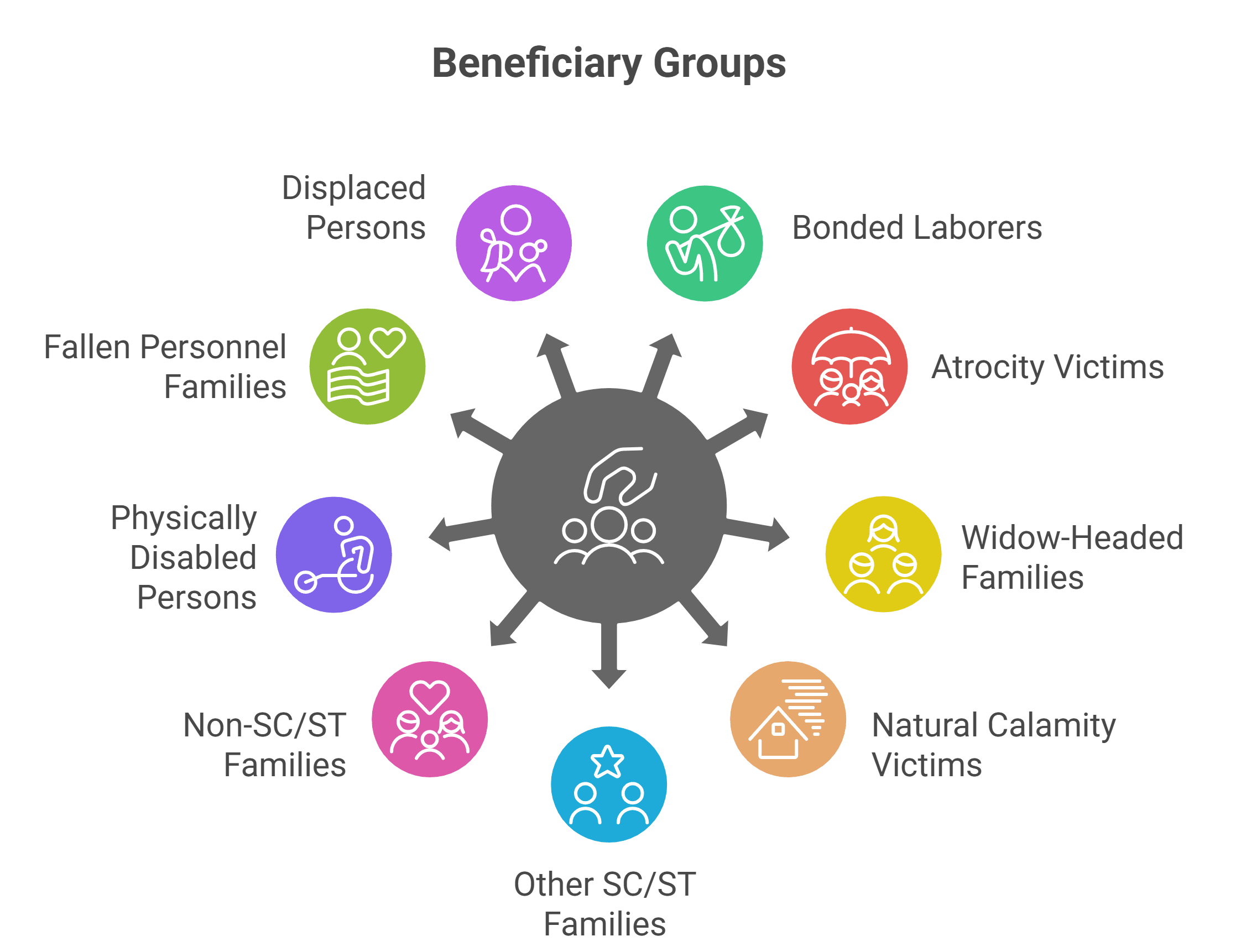
Under the Indira Awaas Yojana (IAY), priority was calculated according to the following order. The order of priority for selecting beneficiaries from the target group below the poverty line was as follows:
- Freed bonded laborers
- SC/ST citizens who are victims of atrocities
- SC/ST families headed by widows and unmarried women.
- SC/ST families affected by floods, fires, earthquakes, cyclones, and similar natural calamities.
- Other SC/ST families.
- Non-SC/ST families.
- Physically disabled persons.
- Families/widows of personnel killed in action in the defense services/paramilitary forces.
- Persons displaced due to development projects, nomads, semi-nomadic and denotified tribes, families with disabled members, and internally displaced persons, provided the families are below the poverty line.
Get the latest reports of IAY or Indira Awas Yojana implementation (IAY reports)
The Indira Awaas Yojana (IAY) has now been discontinued and is being implemented as part of the central government’s PMAY and other affordable housing schemes. The current implementation reports for IAY (iay nic in reports) can be accessed from the rhreporting web portal.
To view the IAY reports (iay nic in reports), follow the steps given below:
Step 1: Go to the the rural housing reporting website at https://rhreporting.nic.in/netiay/EFMSReport/FTOTransactionSummary.aspx (iay nic in reports)
Step 2: Select from the following two options-
- As per generated financial year
- As per sanctioned financial year
Step 3: If you select the ‘Generated as per Financial Year’ option, choose the ‘IAY New Construction’ option from the available categories.
Step 4: A state-wise report (iay nic in reports) with beneficiary details will be generated and displayed on the screen.
Fund allocation under IAY or Indira Awas Yojana
There was a specific schedule for distributing funds under the IAY or Indira Awas Yojana (Indira Housing Scheme). All three installments were disbursed according to this format.
First Installment
The first installment of the IAY or Indira Awaas Yojana (iay.nic.in) was 25 percent of the total unit cost. It was disbursed on a special day called Housing Day. The first installment was released along with a sanction letter or allotment letter.
Second Installment
The second installment of the IAY or Indira Awaas Yojana (iay.nic.in) comprised more than 60 percent of the total unit cost. It was disbursed when the first stage of construction was completed and had reached the lintel level.
Final Installment
This instalment was distributed when a fully functioning bathroom was constructed and the beneficiary started living in the residential unit. This instalment comprised 15 per cent of the total assistance provided.
Benefits of IAY or Indira Awas Yojana
Apart from the providence of a pucca house to the beneficiaries, there were several other key benefits of the IAY or Indira Awas Yojana (iay nic in). The primary benefits of the IAY or Indira Awas Yojana (iay nic in) are as follows-
- The most significant advantage of IAY was that the houses built under IAY were customized to suit the needs of the beneficiaries.
- IAY promoted sustainable construction materials and emphasized the use of locally available resources to support the local economy.
- IAY, or Indira Awaas Yojana, focused on grassroots governance participation. It encouraged Gram Panchayats to lead the change in their village or constituency. This was done to ensure strict monitoring and proper implementation of the scheme.
- Since IAY (iay nic in) advocated an inclusive approach, it supported the creation of workspaces within the residential units.
Special Projects Under IAY
The IAY was primarily designed to provide affordable housing to the backward and economically weaker sections of society. However, some specific projects were also launched under the IAY, such as:
- Rehabilitation of families displaced by natural disasters
- Rehabilitation of families and individuals affected by violent incidents
- Providing housing and shelter to displaced people at international borders
- Providing shelter to laborers, tribal people, and displaced individuals
- Providing homes to people displaced due to various occupational diseases
These were additional shelter programs that were included under the purview of IAY or Indira Awaas Yojana (iay.nic.in).
Identification of IAY Beneficiaries
The District Rural Development Agency (DRDA) or Zilla Parishad will determine, based on the allocated funds and targets, the number of houses to be constructed under the IAY scheme in each panchayat during a particular financial year, and will inform the Gram Panchayat accordingly. The Gram Sabha will then select beneficiaries from the list of eligible families, up to the allocated target, in accordance with the IAY guidelines and established priorities. No approval from the Panchayat Samiti will be required for this selection. However, the list of selected beneficiaries should be sent to the Panchayat Samiti for their information.
Monitoring of IAY or Indira Awas Yojana
The concerned IAY (Indira Awaas Yojana) officials operate a systematic monitoring system. This monitoring system involves area officers submitting annual reports and monthly reviews. The area officers then visit the allocated states and union territories to monitor whether the scheme is being implemented according to the program guidelines.
Evolution of IAY into Pradhan Mantri Awas Yojana (PMAY)
Despite the Indira Awaas Yojana (IAY) running for decades, its objective was not fully achieved, and the number of homeless people continued to rise. This highlighted the need for a better and faster system to provide housing for the urban and rural poor. This led to the launch of the Pradhan Mantri Awas Yojana (PMAY). PMAY is a dedicated affordable housing scheme where beneficiaries are selected based on their income. Those who successfully receive an allocation are provided with an interest subsidy on home loans taken for housing units listed under the PMAY scheme.
Based on their income category, beneficiaries receive a subsidy of up to ₹2.67 lakh from the government. The beneficiary must obtain the loan from a listed lender.
IAY List (IAY NIC in List)
Since the IAY scheme has been merged with the Pradhan Mantri Awas Yojana (PMAY), the IAY list is now released as the PMAY list. The IAY list previously contained the list of eligible beneficiaries under the Indira Awas Yojana (IAY). However, after the introduction of PMAY, the IAY list (iay nic in 2020-21 list) has been replaced by the PMAY list of beneficiaries.
IAY list 2025 is the PMAY list. If you are still searching for the IAY list, you will get a renamed list as a PMAY list. To check the IAY list or PMAY list, follow the mentioned steps-
Step 1: Go to the official website of rural housing reporting @https://rhreporting.nic.in/netiay/newreport.aspx
Step 2: Click on the Awaassoft button on the homepage.
Step 3: Choose the ‘Reports’ option from the drop-down list.
Step 4: You will get the following two options-
- PMAYG Report
- IAY- Indira Awaas Yojana Report
Step 5: Multiple report options will be displayed when you click on the IAY- Indira Awaas Yojana Report.
Step 6: You can click on the desired IAY report.
You can also check the latest IAY list (iay nic in list), which is now the PMAY list. The website also allows you to view older IAY lists (iay nic in list), which were compiled based on the data available when the IAY scheme was in effect.
Features of the IAY or Indira Awas Yojana
The main objective of IAY, or Indira Awaas Yojana, was to provide shelter to homeless and poor citizens of India. However, its objectives can be further elaborated in the points given below.
Homeownership
The country, having recently gained independence from foreign rule, was not strong enough to provide a home for every citizen. However, by 1985, the government had started providing assistance for home construction under the IAY or Indira Awaas Yojana (iay nic in). The primary objective of the IAY or Indira Awaas Yojana was to enable the needy and homeless to become homeowners. Once the poor were guaranteed a home, their economic and living conditions improved.
Self-Construction
One of the unique features of the IAY or Indira Awas Yojana was that while the government provided assistance, beneficiaries were not allowed to hire a third party or agency to build their homes. They had to undertake the construction themselves. However, beneficiaries were permitted to seek assistance from non-governmental organizations, youth clubs, and other non-profit organizations for the construction of their houses.
Sustainable Units
The IAY, or Indira Awaas Yojana (iay.nic.in), also promoted green and eco-friendly construction materials. Under this scheme, it was mandatory for beneficiaries to use green, locally available, and sustainable construction materials for building their homes. It also encouraged the reuse of materials during construction.
Specific Time Frame
Under the IAY (Indira Awaas Yojana) scheme, a specific timeframe was set for house construction. The beneficiary was required to complete the first stage of construction within nine months of receiving the assistance.
Challenges and Limitations of Indira Awas Yojana (IAY)
The Indira Awaas Yojana was launched to provide homes to rural families. It has helped many people, but the scheme also has some shortcomings. These challenges reduce its overall impact.
Key Challenges and Limitations:
Delays
Many houses are not completed on time. Slow release of funds and paperwork are common reasons.
Poor quality
Some houses are built with weak materials. Lack of supervision adds to the problem.
Low awareness
Many families do not know how to apply. They miss out on benefits.
Land issues
Families without land cannot benefit. The scheme does not solve this problem.
Misuse of funds
Cases of corruption and fake beneficiaries have been reported.
Limited support
The money given is often not enough to build a safe, full house.
Weak monitoring
Inspections are not regular. Problems are noticed late.
Despite these challenges, the IAY has made a significant difference by providing shelter to many poor families. However, it needs a more robust system. Greater awareness, stricter monitoring, and timely release of funds can improve the scheme. With these measures, the IAY and similar programs can provide better and more sustainable housing.
Read More: Haryana Housing Board Scheme 2026
Frequently Asked Questions
Q1. What is Indira Awas Yojana (IAY)?
Ans. Indira Awas Yojana (IAY) was a central government housing scheme aimed at providing homes to rural poor families.
Q2. Is Indira Awas Yojana still active?
Ans. No, Indira Awas Yojana has been replaced by PMAY-G to expand housing benefits and improve implementation.
Q3. Who was eligible under Indira Awas Yojana?
Ans. Under Indira Awas Yojana, BPL households, SC/ST families, and rural poor were eligible for housing assistance.
Q4. What benefits were offered under IAY?
Ans. Indira Awas Yojana (IAY) provided financial support for constructing safe and permanent houses in rural areas.


