

It is reported that the Uttar Pradesh (UP) government has implemented title-based property registration, where the government examines who actually owns a property prior to registering it to be sold. Contrary to the current document-based system, it will verify that the property is owned by the owner, thus preventing disputes and fraudulent transactions. What is this, and how will it benefit buyers of homes? Check out the article for more information!
In India, property registration is typically used to record the sale of property, but doesn’t always prove who the owner is. This can lead to disputes over ownership which arise after the purchase has been completed. So, in the hope of stopping fraud, including multiple sales of the same property with fraudulent documents The UP government has endorsed the registration of property based on title. Let’s look deeper into the implications for buyers of homes.
What is title-based property registration?
The title-based registration of property for properties in UP is a method by which sub-registrars verify the legal ownership of the seller through the linking of documents from municipal corporations, municipal departments and registration offices before accepting any transaction. Only properties that have a clear, authentic title will be registere,d similar to the registration systems used in Delhi as well as Haryana.
This is aided by the digitisation of land records as well as better coordination between government departments that manage land and property information. By keeping current and verified property ownership information, the program is designed to minimise the confusion caused by multiple claims and long-running legal disputes.
What is the difference between title-based and document-based property registration?
The table below makes an obvious distinction between the new title-based property registration system and the previous property registration system based on documents.
| Title-based property registration | Document-based property registration |
| Property ownership is verified and certified before registration. | Only the sale deed or document is registered. |
| Ownership is verified by the government before registration | Ownership is not verified at the time of registration |
| Ownership records are updated and maintained by the State | Records show that a transaction has taken place, not ownership validity |
| Buyer has less responsibility to check title history | Buyer must independently check title history |
| It offers stronger protection to homebuyers | It provides limited protection against title issues |
How To Check Property Records In Uttar Pradesh
However, even with a title-based registration, buyers must verify the property’s records for themselves. Uttar Pradesh offers several online portals:
- Bhulekh UP Portal gives access to land ownership records, which show who legally owns the land. You can search Khatauni documents that contain owners’ names, land area,s and property rights. Go to upbhulekh.gov.in, choose the district you reside in, your tehsil and village, and then type in your plot’s number, or owner’s name.
- IGRSUP The portalprovides information on property registration, past transactions, as well as the encumbrance certificate. It is managed by the Stamp and Registration Department, which manages this portal on igrsup.gov.in. It allows you to search for properties and verify if any legal dues are in place.
- Bhu Naksha Portal provides the boundaries of land and maps for properties in rural areas. This allows you to verify that the boundaries of the property are in line with what the seller states.
- Revenue Court Management System reveals the existence of any ongoing disputes concerning the property. Be sure to verify this before making any payment.
Current Registration Process In Uttar Pradesh
The registration process is based on specific documents, and it follows an established procedure:
Required Documents:
- The saleRegistration based on the title can detect fraud in the verification phase before registration takes place. deed was prepared on stamp paper
- Aadhaar card, voter ID, or passport for the buyer and seller
- Previous title deeds proving ownership
- Property tax receipts
- Encumbrance certificate
- Municipal tax clearance certificate
Process Steps:
- Find out the stamp duty calculated based on the property’s value
- Pay your registration and stamp duty fees on the internet
- Schedule an appointment at the office of the sub-registrar
- Bring all documents in original identification
- Both parties sign in the presence of witnesses
- Sub-registrar reviews and registers the document.
With title-based registration, an additional verification step occurs before final registration, in which the system checks ownership across government databases.
Stamp Duty Rates In Uttar Pradesh
Real estate transactions require stamp duty payments. Current rates in Uttar Pradesh:
- Male buyers: Seven per cent of the property value
- Female buyers: Six per cent of the property value
- Registration charges: One per cent of property value
Women who buy homes save one cent in stamp tax, which makes the purchase of a home much more affordable. The stamp duty maximum for property partitioning deeds between family members is set at Rs 5,000, as per the government’s September 2024 decision.
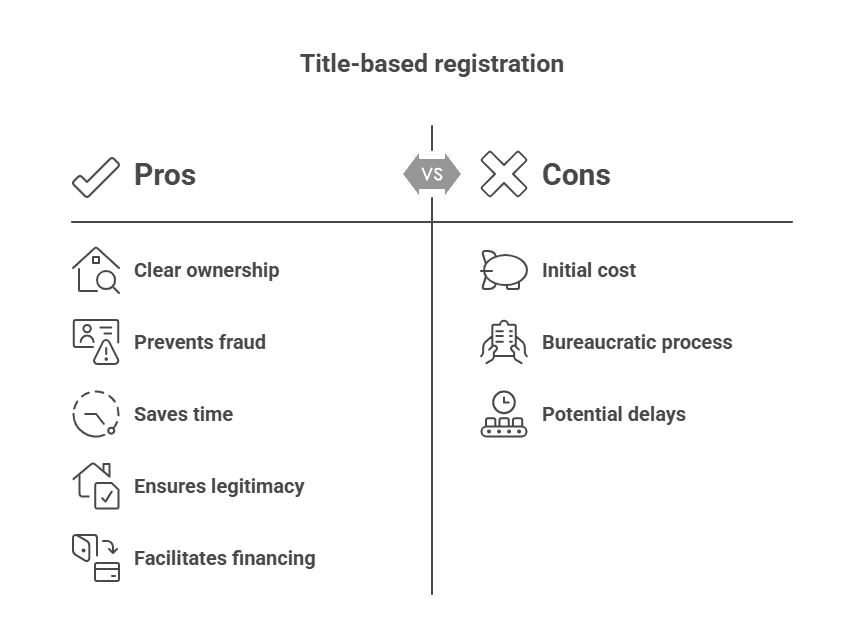
What are the key benefits of title-based registration for homebuyers?
Here is how homebuyers benefit from title-based property registration.
- It allows buyers to clearly identify the legal owner of the property.
- Verified ownership can help prevent transactions that are based on false or misleading documents.
- Buyers don’t have to depend on multiple manually-checked title checks, thereby saving time as well as effort.
- Only legitimate owners are able to sell their property.
- The process of financing and selling becomes much easier with clear titles, making future home loans and sales easier and more readily accepted.
How Uttar Pradesh is implementing title-based registration?
The proposed system will ensure that the ownership information will be automatically pulled when registering, thereby reducing the need for manual checks and erroneous entries.
For properties in rural areas, the system will automatically display details such as khasra numbers and recorded ownership information from digital land documents during registration. In the case of urban property, the information about ownership is retrieved from the records maintained by municipal authorities or development authorities, as well as different government departments. This means that the sub-registrar is able to look up and verify ownership information from various official sources on one screen prior to approving the registration.
Registration of property will be allowed upon the time that the sub-registrar has verified whether the purchaser is the legal owner and that the property is free of disputes, discrepancies, or encumbrances. Once the verification is completed, the transaction will be recorded and ownership records updated in line with the verification. This method marks a distinct shift to a verified ownership-based registration within the State.
While title based registration of property can be a beneficial step toward clearer ownership and a safer transaction, it is not a complete solution to all dangers. So, performing thorough due diligence on the title before signing any property deal is vital.
Tips For Property Buyers In Uttar Pradesh
Before Making Any Payment:
- Go to Bhulekh Up for the most current ownership details
- Verify using IGRSUP to determine if the seller has actually identified as the owner
- Get an encumbrance document that shows a 13-year history of the property
- Go through the Revenue Court system for the ongoing dispute
- Go to the exact property location and verify the boundaries
During Registration:
- Ensure all required documents are original
- Verify the stamp duty calculation is correct
- Read the entire sale deed before signing
- Keep copies of all documents
- Get a proper receipt for all payments
After Registration:
- Collect the registered sale deed within the specified time
- Update municipal records in your name
- Transfer electricity and water connections
- Pay property tax regularly
- Store all original documents safely
Common Property Fraud Types To Watch For
- Multiple sales: The fraudsters offer an identical property to several buyers by using fake documents. Each buyer believes that they have the property until there are disputes.
- Identity Theft: criminals make fake Aadhaar cards as well as other documents to pretend to be property owners and sell their land with their knowledge.
- Tampered Records: Certain gangs of fraud alter the land records to identify the owner’s name, and promptly sell off the land before anybody is aware.
- Inheritance fraud: Family members forge wills or fake legal heir certificates to market properties belonging to other relatives.
Registration based on the title can detect fraud in the verification phase before registration takes place.



Join The Discussion