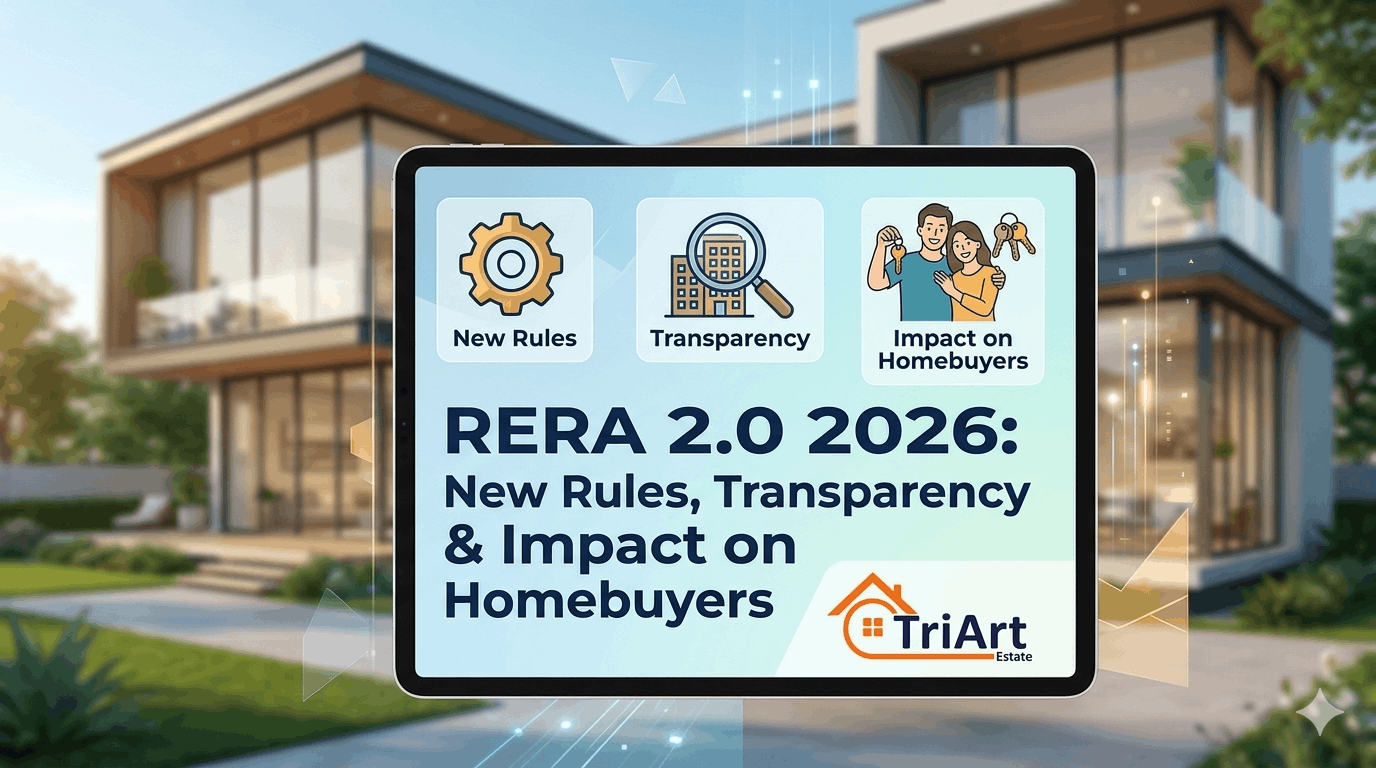
Today’s homebuyers expect far more than just a RERA registration number or an estimated timeline. They seek regular updates and clear transparency regarding how their funds are being utilized. Discover what RERA 2.0 has in store.
The Indian real estate sector is one of the largest employment-generating sectors, supporting over 250 allied industries and a million people. Yet, it has long been characterized by grand promises and unusually long delays.
When the RERA Act came into force in 2016, it felt as though things were finally changing. Developers were held accountable and directed to share all project-related information with buyers. If they failed to do so, buyers could take legal action against such malpractices, which made them feel more empowered.
Years later, the market has changed—and so have the buyers. Today’s consumers are digitally savvy and are no longer satisfied with mere assurances. This is precisely why RERA 2.0—launched in March 2026—is the greatest necessity of the present day.
From regulation to transparency
It has been well established that RERA certification has brought about a significant transformation in this industry. For the first time, if developers failed to fulfill their promises, they faced legal repercussions—a development that instilled a sense of security among homebuyers.
This, however, does not imply that the framework was devoid of shortcomings. RERA regulations still vary across different states, the dispute resolution process has often been sluggish, and the facility to track construction progress in real-time remains limited.
For today’s homebuyers, this is no longer sufficient; they expect far more than just a registration number or an estimated timeline. They demand regular updates and want absolute clarity regarding how their funds are being utilized. Furthermore, should these expectations go unmet, any subsequent legal action must be both swift and effective.
What can RERA 2.0 achieve?
The next phase of the legislation must focus on three interconnected objectives: technology, uniformity, and accountability.
Digital dashboards can empower homebuyers by enabling them to track every stage of construction, approvals, and fund utilization. While the original RERA already mandated that developers deposit 70% of funds collected from buyers into a separate escrow account for security purposes, RERA 2.0 further strengthens this rule by introducing third-party audits and regular fund reporting. This fosters greater transparency and mitigates risk.
Furthermore, strict accountability regarding interest payments will ensure that developers compensate buyers in the event of delays, thereby creating a robust safety net.
Uniformity across all states is equally crucial. Standardized definitions for carpet area, delivery timelines, and penalties will ensure that homebuyers receive the same level of clarity and protection, whether they are purchasing a flat in Pune or Patna.
Emphasis must also be placed on the expeditious resolution of disputes. Digitally enabled and time-bound grievance redressal mechanisms can resolve cases—which often drag on for months or even years—within a matter of weeks.
Moreover, enhanced developer transparency—facilitated through ratings and public records—will empower buyers to make informed decisions. Access to data regarding past project performance, regulatory compliance history, and delivery track records will enable buyers to distinguish between trustworthy developers and those who fail to deliver on their promises.
RERA 2.0 also expands the definition of “ongoing projects.” Previously, some developers managed to evade registration by claiming that their projects had commenced prior to the enactment of RERA. The new framework brings such projects under the regulatory ambit as well, thereby extending legal protection to a larger number of homebuyers.
The way forward for RERA 2.0
For homebuyers, the benefits are clear: ranging from greater transparency in information to reduced risk and increased confidence in their investment.
For developers, this shift presents an opportunity to build credibility and attract long-term investors. Many players in the real estate sector view RERA 2.0 as a cultural transformation. They believe that mere compliance with regulations is just the first step; maintaining transparency at every stage and prioritizing the buyer above all else is the only way forward.
For buyers, this perspective demonstrates that their time and investment are now accorded greater respect.
Undoubtedly, RERA laid the foundation for accountability, but times have now changed.
Summing up RERA 2.0
RERA 2.0 endeavors to foster trust among buyers through technological advancements. It now remains to be seen whether developers adopt transparency merely as a checklist item, or if they ensure that it becomes an integral part of the entire ecosystem, thereby enabling homebuyers under RERA to finally attain the control and clarity they rightfully deserve.
Read more:How to Choose the Right Office Space: Tips, Cost & Location Guide