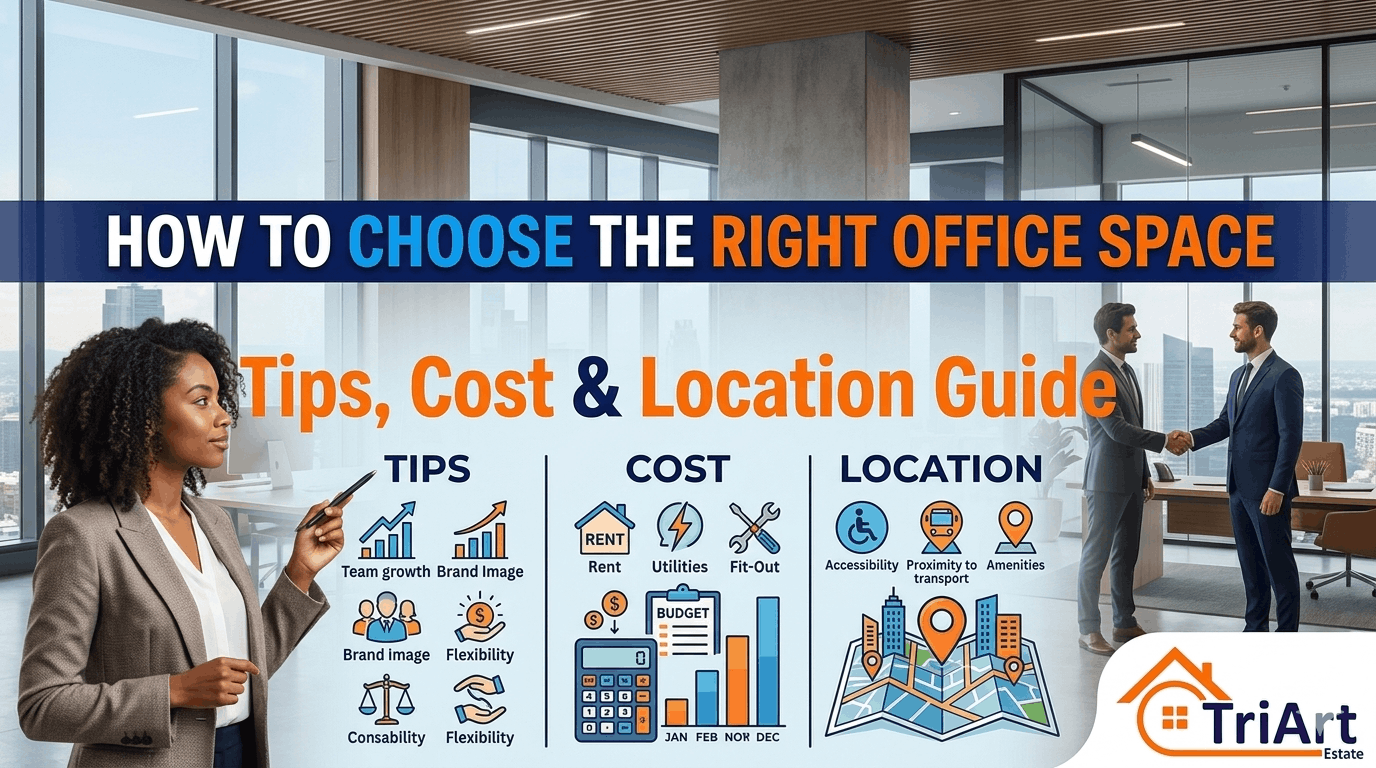
Are you looking for an office space that meets your budget and other requirements? Then this article is just for you! Choosing the right location is the first step toward ensuring smooth daily operations and creating an environment that keeps employee morale high. So, how do you go about selecting the right space? To find out, read this entire article, as it outlines the most essential tips for choosing the perfect office location.
Whether you are a startup establishing your first workplace or an established company looking to expand, this process involves much more than simply selecting a physical location. An ideal office should strike the perfect balance between functionality, affordability, and sustainability, while also fostering an environment that supports productivity and growth. So, let’s take a look at the key factors you should consider when choosing your ideal office space.
Top tips to choose the right office space
If you are still wondering what factors to consider when looking for an ideal office space, take a look at the suggestions below.
Location
As is often said about real estate, it is all about location, location, and location. And they aren’t wrong. Your location will have an impact on both your employees and your clients. For employees, your workspace should be easily accessible and convenient to commute to. As for clients, they should be able to locate your workspace without any hassle, and the location itself should stand out for all the right reasons. The surrounding environment should also be aesthetically pleasing; this is another factor that will help you decide on the location for your new office space in Delhi NCR. Try to choose a location that offers ample greenery and natural light, benefiting both your employees and your brand.
Cost
When selecting office space, checking the price tag—and ensuring that you are getting full value for your money—is arguably the most crucial step. Overspending can place a financial strain on you, potentially forcing you to opt for a smaller space. Conversely, spending too little may result in you having to vacate the premises—either because you are dissatisfied with the space or because it proves to be unsuitable. Office spaces often entail hidden costs that can significantly inflate your bills; therefore, paying close attention to these details can help you avoid unnecessary expenses. To make office space more affordable…
Amenities
A good office space should feature reliable, high-speed internet, adequate power backup, and robust security arrangements—including CCTV surveillance and security personnel. Basic amenities such as meeting rooms, a pantry, and a comfortable relaxation area are essential for ensuring the smooth execution of daily operations. Furthermore, consider workplaces that offer good air quality, abundant natural light, and eco-friendly facilities, as these factors contribute to enhancing both employee well-being and productivity.
Unit price
When selecting office space, choosing the right size is crucial. A general rule of thumb is to allocate approximately 100–150 square feet of space per employee. However, this may depend on whether you prefer an open layout or private offices. The space should offer scope for future expansion or downsizing, thereby sparing you the hassle of having to relocate to more expensive premises later on. Layout and functionality are equally important; the office space should be suitable for accommodating both quiet workspaces and collaborative areas.
Budget
When creating your budget, do not focus solely on the rent. Be sure to include all additional expenses, such as electricity, water, maintenance charges, property taxes, parking fees, and insurance. Furthermore, keep an eye out for hidden costs—such as Common Area Maintenance (CAM) charges, security fees, and initial expenses for interiors or renovations—as these can significantly increase the total expenditure.
Lease terms and legalities
Before finalizing a location, carefully review the terms of the lease. If your business is growing, opt for a flexible lease; conversely, if you prioritize stability and better pricing, choose a long-term lease. Ensure that the agreement includes clear exit clauses or sub-letting options to avoid complications should your requirements change. To prevent future issues, pay close attention to details such as rent escalation clauses, maintenance responsibilities, and any legal stipulations.
In essence, leasing office space involves more than just selecting the right location at the right price. It is equally crucial to handle documentation, conduct proper verification, and complete all paperwork in advance. If you are relocating to a new area, enlisting the assistance of an agent can be beneficial, as they can advise you on the pros and cons of selecting office space in that specific locality.
Furthermore, it is advisable to engage a professional broker to calculate the total cost of the space—including rent, utilities, construction expenses, relocation costs, etc.—and to identify any hidden charges. Consult a property lawyer to address any deficiencies in your lease contract, as such documents are often drafted in favor of the landlord.
Read more:What is Occupancy Certificate? Benefits, Documents & Process