
The New Delhi Municipal Council (NDMC) is one of the zones falling under the jurisdiction of the Municipal Corporation of Delhi. It encompasses approximately seven sub-zones within Delhi. Read this blog to learn how you can pay your property tax within the NDMC’s tax jurisdiction.
To streamline property tax collection, the Municipal Corporation of Delhi has divided the city into the North Delhi Municipal Corporation (NDMC), the East Delhi Municipal Corporation (EDMC), and the South Delhi Municipal Corporation (SDMC). Properties located in the following zones fall under the purview of the NDMC:
- Karol Bagh
- Rohini
- Civil Lines
- Narela
- Keshavpuram
- City HQs
- City SP zone
NDMC Property Tax: A Quick Info
NDMC property tax is levied on land and buildings in New Delhi, and it is mandatory for landowners to pay this tax.
| Information | Details |
| Authority | North Delhi Municipal Corporation |
| Official website | https://www.ndmc.gov.in/ |
| Payment last date | Jun 30, 2026 |
| Address | NDMC Head Office Palika Kendra, Parliament Street, New Delhi – 110001 |
| Email ID | [email protected] |
| Helpline number | 1533 |
Factors Considered in NDMC Property Tax Details
Six factors are considered when calculating the NDMC property tax.
Unit Area Value: This is a fixed value assigned to each square meter of the built-up area. For the purpose of this calculation, Delhi has been divided into 8 categories.
| Category | Unit area value per square metre |
| A | Rs 630 |
| B | Rs 500 |
| C | Rs 400 |
| D | Rs 320 |
| E | Rs 270 |
| F | Rs 230 |
| G | Rs 200 |
| H | Rs 100 |
Built-up area: This is the total area upon which construction has been carried out. It also includes the thickness of the walls.
Age factor: The older a building is, the lower its tax liability. Based on the age of the property, it is assigned a value between 0.5 and 1.0.
| Year of construction | Age factor |
| Prior to 1960 | 0.5 |
| 1960-69 | 0.6 |
| 1970-79 | 0.7 |
| 1980-89 | 0.8 |
| 1990-99 | 0.9 |
| 2000 onwards | 1.0 |
Use Factor: Each property is assigned a value between 1 and 10, based on its mode of use. Non-residential properties are subject to higher taxes compared to residential properties.
| Property type | Use factor |
| Residential property | 1 |
| Non-residential public purpose | 1 |
| Non-residential public utility | 2 |
| Entertainment, clubs and industry | 3 |
| Restaurants and up to 2 star hotels | 4 |
| 3 star and above hotels, hoardings and towers | 10 |
Structure factor: The manner in which a building is constructed also impacts the tax calculation. Based on the type of construction, every building is assigned a value of 0.5 or 1.0.
| Structure type | Structure factor |
| Pucca building | 1.0 |
| Semi-pucca | 1.0 |
| kuchha | 0.5 |
Occupancy factor: Vacant properties attract the lowest property tax, whereas a rented-out building is assigned the highest occupancy factor.
| Occupancy type | Occupancy factor |
| Vacant plot | 0.6 |
| Self-occupied | 1.0 |
| Rented | 2.0 |
NDMC Property Tax Rate
Not all properties in Delhi are taxed at a uniform rate. Tax rates for residential, commercial, and industrial properties vary, and this variation is also based on the locality. As mentioned above, Delhi has been divided into eight categories. The tax rates applicable to properties falling under these categories are as follows:
| Category | Tax rate for residential property | Tax rate for commercial property | Tax rate for industrial property |
| A | 12% | 20% | 15% |
| B | 12% | 20% | 15% |
| C | 11% | 20% | 12% |
| D | 11% | 20% | 12% |
| E | 11% | 20% | 12% |
| F | 7% | 20% | 10% |
| G | 7% | 20% | 10% |
| H | 7% | 20% | 10% |
NDMC Property Tax Calculation
NDMC property tax is calculated based on the estimated annual value of the property. It may increase or decrease in tandem with changes in the property’s market value.
The formula commonly used to calculate NDMC property tax is:
Tax Rate x (Unit Area Value x Built-up Area x Age of Building x Usage Factor x Structure Factor x Occupancy Factor)
NDMC Property Tax Rebate and Penalty
Women, taxpayers with disabilities, ex-servicemen, and senior citizens are entitled to a 30% rebate on NDMC property tax for a property measuring up to 200 square meters.
Furthermore, if the entire annual tax amount is paid in a single installment within the first quarter of the year, the taxpayer will be entitled to a 15% rebate.
DDA/CHGS flats will receive a 10% rebate on the annual value of flats measuring up to 100 square meters.
Conversely, if the tax amount is not paid on time, interest will be levied on the delayed payment at a rate of 1% per month.
NDMC Property Tax Bill Payment 2026
Paying NDMC property tax in 2026 is now extremely easy. You can make an offline payment by visiting ITZ Cash counters, or conveniently pay online from the comfort of your home.
How to Pay NDMC Property Tax Online in 2026
Paying your NDMC property tax online is extremely easy and convenient. Here is a detailed guide to assist you in completing the payment process:
- Visit the NDMC Portal: Open your web browser and visit the NDMC portal.
- Access Online Services: On the homepage, locate the ‘Online Services’ tab and click on it.
This will take you to a new page, where various online service options will be available..
- Login: Under the ‘Property Tax’ section, click on ‘Citizen Login’ to open the login page..
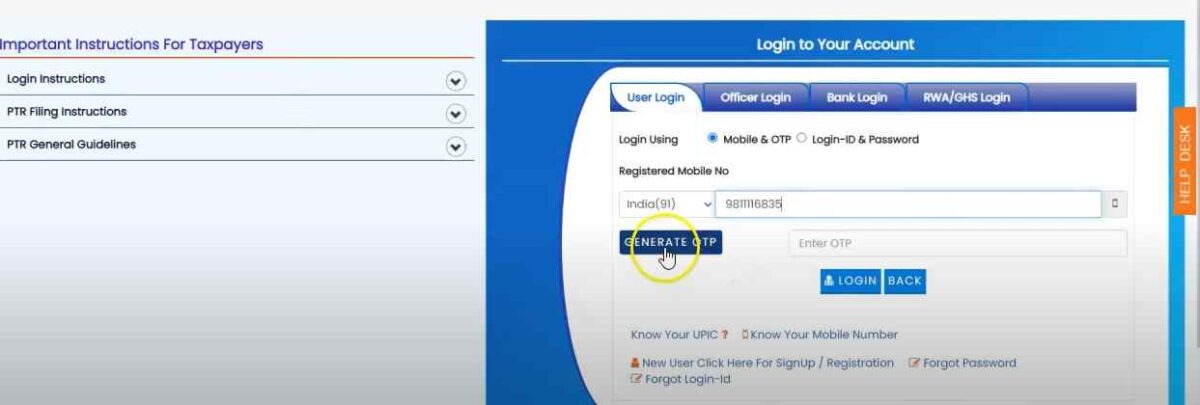
- Generate OTP: Enter your registered mobile number in the provided field and click on ‘Generate OTP’. A unique code (One-Time Password) will be sent to your registered mobile number.
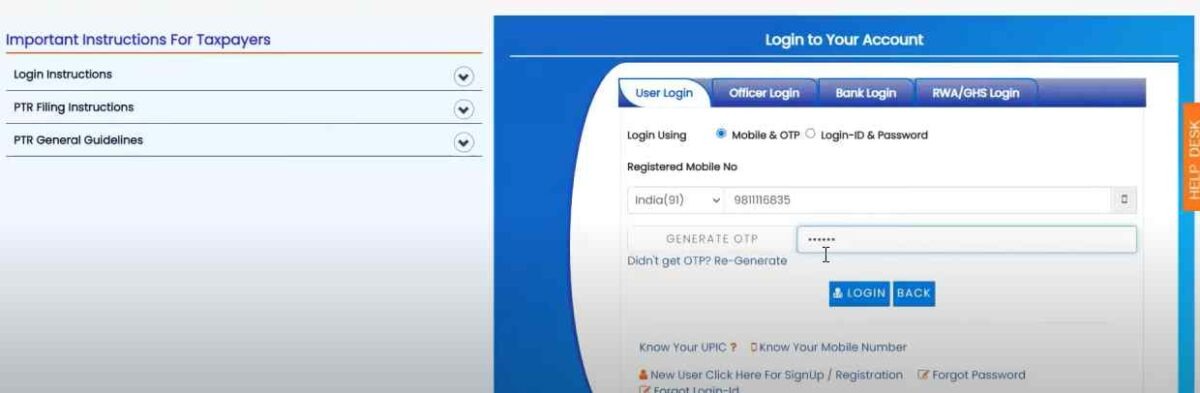
- Verify OTP: Enter the OTP received on your mobile into the designated field provided on the website and click ‘Login’. This will log you into your property tax account.
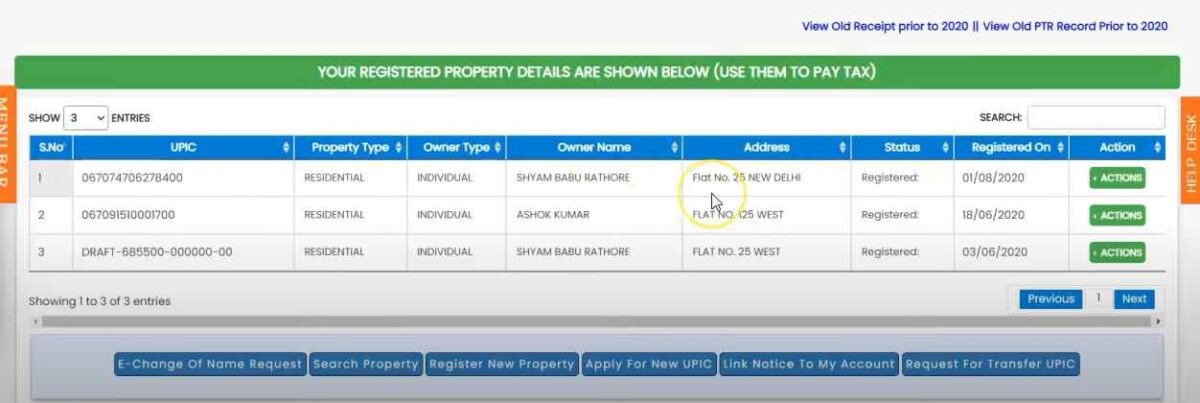
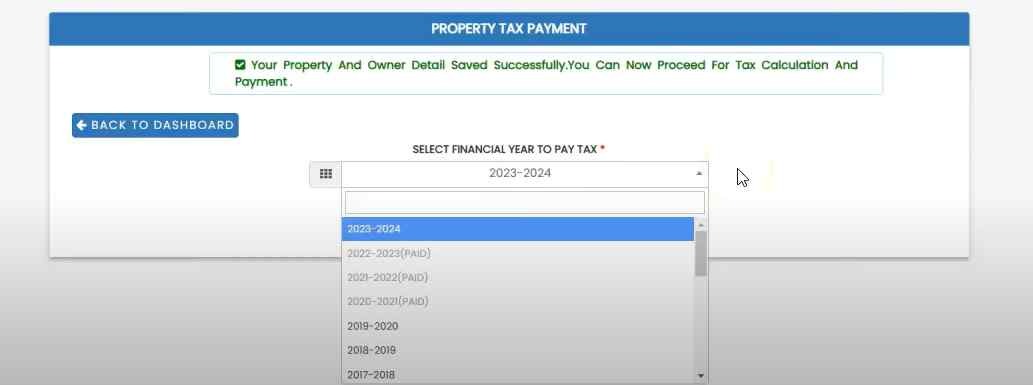
- Select a Payment Option: After logging in, navigate to the Property Tax Payment section. Here, you will find payment options such as credit cards, debit cards, and net banking.
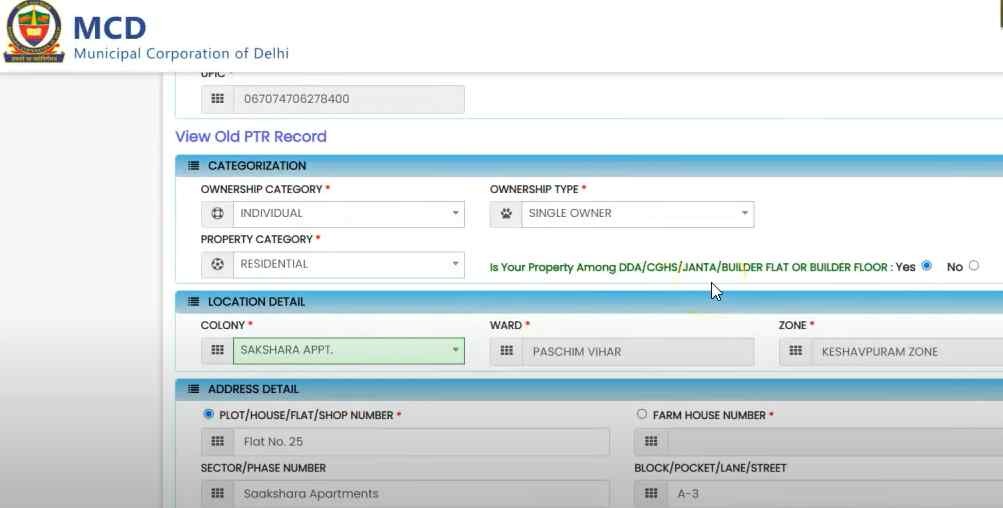
- Complete Payment: Follow the on-screen instructions to complete the payment process. Provide your payment information and verify the transaction.
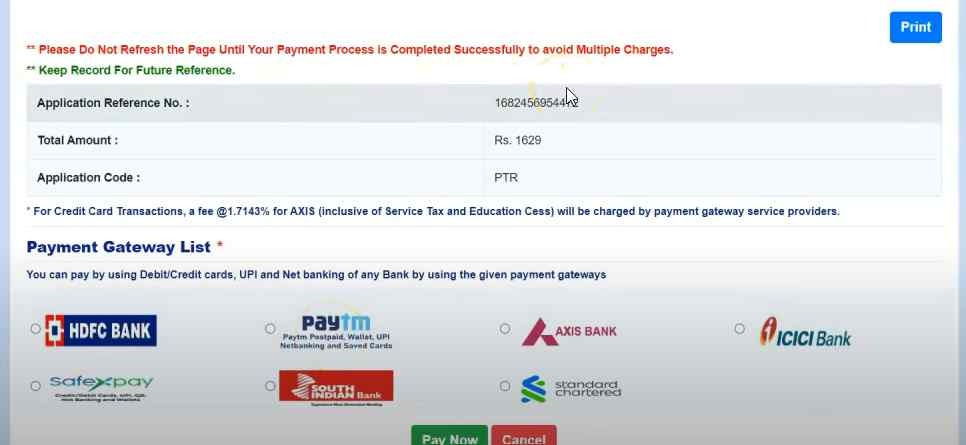
- Receive Confirmation: A receipt will be generated once the payment has been successfully processed. Please keep this receipt safe for your records, or print it out if needed. It serves as proof of payment.
NDMC Property Tax Offline Payment
You can also pay your property tax offline at any ITZ Cash counter in North Delhi. Payments are accepted via credit/debit card, cash,, or cheque.
NDMC Property Tax 2026: The Jan Vishwas Bill Reforms
Following the new ‘Jan Vishwas Bill,’ the NDMC is implementing a major overhaul of its property tax regime. Starting in 2026, the archaic ‘Annual Rent Value’ (ARV) system for property tax in Lutyens’ Delhi will be replaced by a significantly simpler ‘Self-Assessment Model.’ The objective of this transition is to minimize legal disputes and facilitate the resolution of tax-related matters for residents. By adopting a formula-based framework, the Council aims to enhance transparency and reduce the reliance on subjective estimates for homeowners regarding their tax liabilities.
- Key Change: Property tax has now been bifurcated into two components: Building Tax and Tax on Vacant Land.
- New Requirement: A mandatory ‘Property Identification Code’ will now be required for every property for the purpose of all taxes and civic services.
- Valuation: A ‘Municipal Valuation Committee’ will now re-determine the base value every three years to ensure that assessments remain up-to-date.
New Property Tax Framework for Commercial Assets
The most significant changes in the 2026 guidelines focus on commercial and high-value properties falling under the jurisdiction of the NDMC. The objective of this new framework is to eliminate the arbitrary discretion of tax inspectors by implementing a standardized ‘Unit Area Value’ (UAV) mechanism.
- Primacy of Self-Assessment: Commercial property owners can now independently calculate their tax liability based on the ‘Base Unit Area Value’ specific to their locality or zone.
- Usage-Based Assessment: For commercial spaces, the tax rate is now directly linked to the nature of their usage—whether it serves as a boutique office, a retail outlet, or a co-working space.
- Decriminalization of Penalties: In alignment with the ‘Jan Vishwas Bill,’ minor clerical errors in tax filings will no longer result in criminal prosecution. Instead, a ‘tiered financial penalty system’ has now been implemented.
Impact on Lutyens’ Business Districts
For commercial hubs such as Connaught Place, Khan Market, and Bengali Market, the 2026 reforms have provided much-needed clarity. The annual value is now calculated by multiplying the Unit Area Value by the property’s age and occupancy factors. This change is expected to stabilize tax revenue for the Council, while also providing a predictable financial roadmap for commercial landlords and business owners in Central Delhi.
Conclusion to NDMC Property Tax
NDMC Property Tax is a direct tax that every property owner in North Delhi is required to pay. It serves as a source of funding for the Municipal Corporation, and improvements to infrastructure can only be undertaken when these taxes are paid. Given the ease and convenience of online payments, there is no longer any excuse for failing to pay this tax.
Read more: Bhu Naksha Haryana 2026: View Land Records, Maps & Jamabandi Portal


Join The Discussion