
Renting a home is an ideal option for many homebuyers and those who work in another city or travel regularly. Renting can be a great option and offer flexibility, but it can also increase overall expenses. Rent can be particularly expensive in metropolitan cities like Bangalore, Delhi-NCR, Delhi, and Mumbai. High demand and job opportunities drive rental prices higher. This is particularly evident in sought-after locations, especially near educational and employment centers. Rent is a common expense for renters, accounting for approximately 30-40 percent of their budget. This hinders saving or planning for the future. Furthermore, inflation negatively impacts savings opportunities. With better planning and choosing the right rental option, one can significantly reduce expenses and save money on rent. In this article, we offer some helpful tips that renters can use to reduce their rent burden.
Evaluating rental costs and how it helps
If you’re looking to rent a property, tenants typically factor in their monthly rent as well as maintenance costs. However, this isn’t an accurate representation of the true cost of living. Renters should estimate their total expenses to determine how they can make significant savings.
In addition to monthly rent and maintenance fees, tenants also incur significant costs when signing a rental contract, including a rent security deposit. The security deposit typically amounts to two months’ rent, although it can be higher in some cities, such as Bangalore. Additionally, if the property is purchased through a real estate agent, a brokerage fee may also be required. Most renters overlook other expenses associated with renting a home. Other expenses, such as utility bills (gas, electricity, water, etc.), internet charges, and parking charges, can add up to significant dollar amounts. While estimating the total cost of renting a house, the associated expenses should also be taken into consideration.
Negotiating rental terms
Rental terms can be negotiated. However, many tenants don’t know how to effectively negotiate a lower rent. Most landlords are flexible, which is beneficial for tenants. Tenants should be prepared with the necessary information to effectively negotiate rent. Knowing the current rent in the area where they wish to rent a home is crucial. This allows tenants to negotiate rent increases and deposit amounts. Tenants can also negotiate lock-in periods and notice periods to ensure they don’t face financial hardship. Some landlords may agree to reduce maintenance fees or society charges.
Choosing better rental options can ultimately help tenants save money. For example, they can choose a home with the same rent but lower maintenance and deposit fees. Long-term rental agreements are beneficial for tenants and are another way to reduce rental expenses.
Timing is crucial when negotiating lease terms. This means that certain periods that aren’t peak season or before the agreement’s renewal are ideal opportunities for tenants to negotiate. Furthermore, the terms of the rental agreement should be clearly spelled out to avoid any potential conflicts.
Choosing rented property wisely
Rental prices are directly influenced by the property’s type and location. Rents in prime areas, such as premium areas, prime locations, and central business districts, are higher than those in other areas within and around the city, and in developing areas. Renting a home in these affordable areas can potentially save rent. Furthermore, rental costs vary depending on the property type. Older, well-maintained homes will be less expensive for homebuyers than apartments in recently launched projects. Furthermore, properties can be furnished or unfurnished, and rents vary accordingly. Those who live alone can also consider co-living spaces, which can be an effective way to reduce their monthly expenses.
Availing tax benefits
Salaried employees can reduce their taxes by availing the benefits of House Rent Allowance (HRA). To qualify for this, you must be aware of the eligibility criteria. Furthermore, supporting documents such as rent receipts or your landlord’s PAN (if your annual rent is more than ₹15,000) are required to avail these tax benefits. HRA benefits vary in metropolises and non-metro cities. Those working in Delhi, Mumbai, Chennai, and Kolkata can avail 50% of their income as HRA, while those working in other cities are eligible for a maximum of 40%.
Deciding between renewal and relocation
It’s important for tenants to understand the best option for renewing their rental contract, whether moving to a new home is more profitable or a better option. Landlords typically increase rents upon renewal, which can significantly impact rental costs. Tenants can compare their current rent with rents in the same area or consider relocating to a less expensive location. If a similar property is available for rent at a lower rate, this may be a better option. While tenants may incur one-time moving expenses, such as packing and brokerage, their monthly rent will be lower. Furthermore, a tenant who decides to relocate is more likely to negotiate a rent increase and retain the property.
TriArt Estate POV
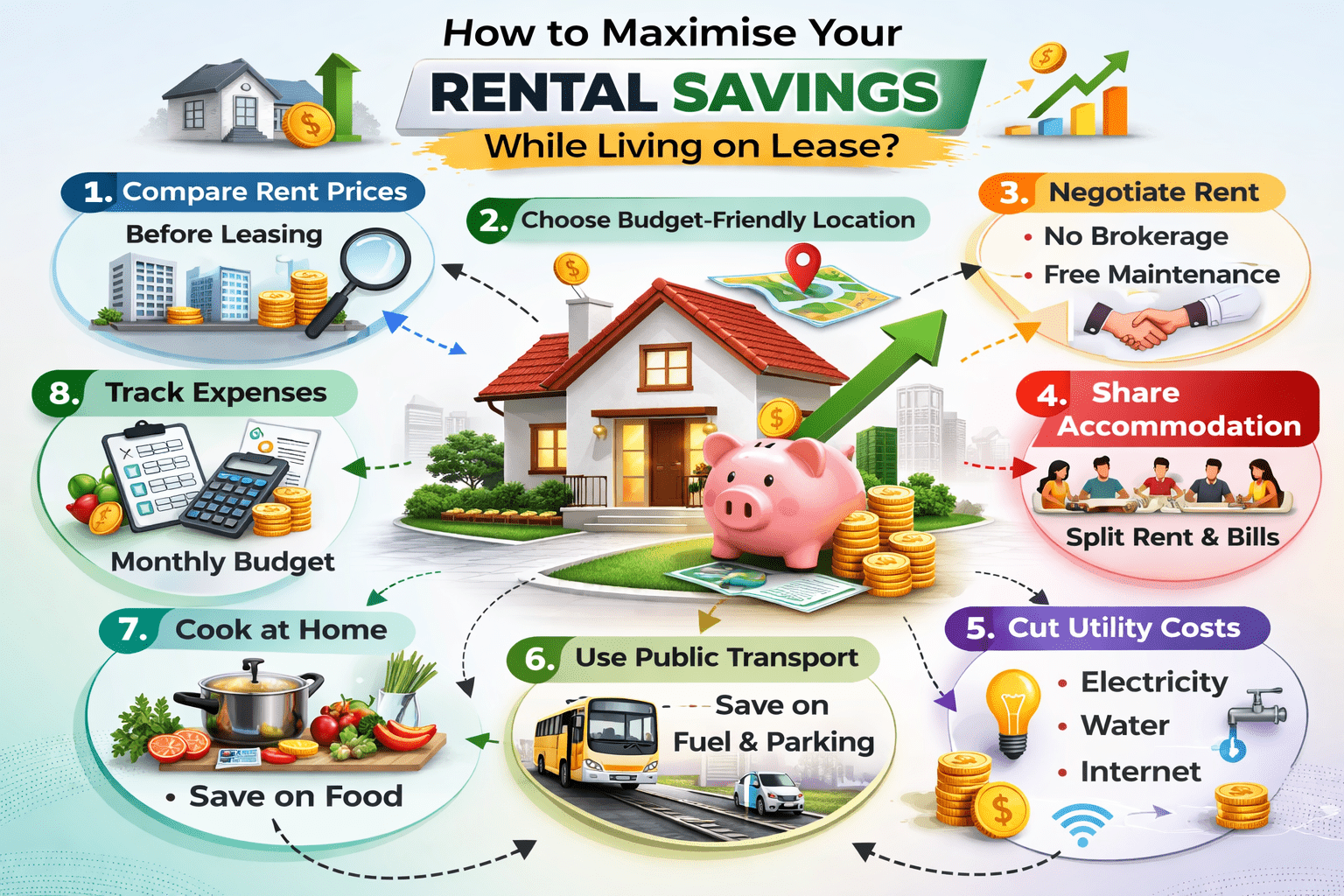
Renting property doesn’t always mean higher expenses. By adopting smart ways to save money, residents can reduce their rent in the long run. To do this, they need to know how much rent they are paying. Inflation and rising rents have a financial impact on tenants. By choosing the best location and property type, smartly negotiating lease terms, and considering ways to move or renew, tenants can reduce their rent and increase their savings over time.
Frequently Asked Questions
Ques. How can I reduce my rent while living on lease?
Ans. You can negotiate rent, choose affordable locations, opt for longer lease terms, and avoid paying unnecessary brokerage charges.
Ques. Is sharing accommodation a good way to save money?
Ans. Yes, flat-sharing helps split rent, electricity, water, and internet bills, significantly lowering your monthly expenses.
Ques. How can I cut down utility costs in a rental home?
Ans. Use energy-efficient appliances, switch off unused electronics, conserve water, and choose affordable internet plans.
Ques. Should I invest while living on rent?
Ans. Yes, build an emergency fund and invest through SIPs or savings plans to grow wealth while managing rental expenses smartly.