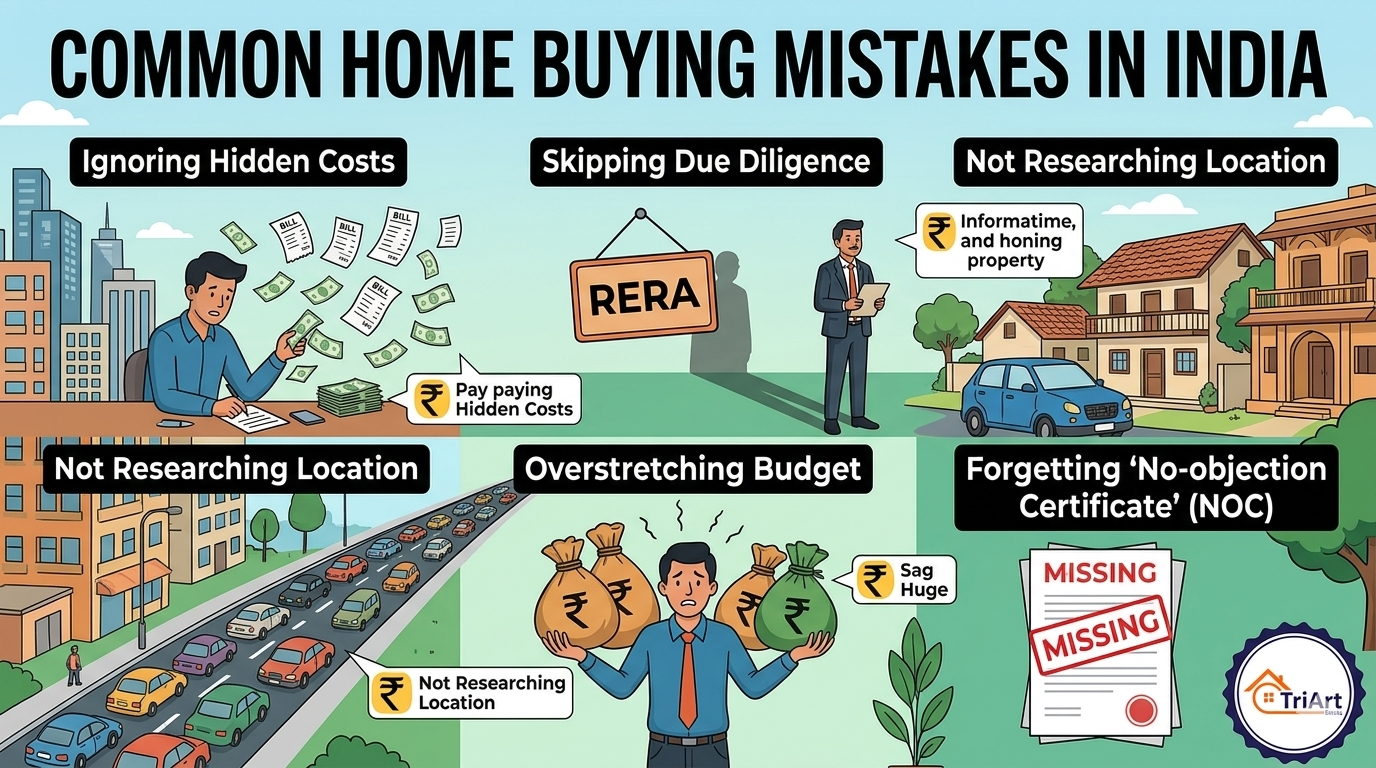
Buying a home is often the biggest financial decision of your life. In India, real estate is deeply intertwined with emotions, traditions, and aspirations; consequently, for Indians, it can be easy to overlook practicality amidst the excitement of purchasing a home. Therefore, it is crucial to remain mindful of the financial implications of your choices and to avoid the most common mistakes made when buying a home in India. Since you are here, we already know that you are looking for a checklist for buying a flat before making your final decision; so, here is a simple checklist designed to help you make sound financial choices.
We understand that becoming a property owner is a significant step, but making the right financial decisions is an even bigger one. From setting a budget to gauging market trends, we take care of every detail. As a buyer—whether you are purchasing your first home or upgrading to a luxury residence—the most crucial aspect is to avoid common financial pitfalls. In this guide, we outline the most frequent financial mistakes that buyers often make—and explain how you can navigate this entire process with complete clarity, confidence, and peace of mind.
1. Underestimating the Total Cost
Many buyers focus solely on the quoted price of a property, overlooking the hidden costs associated with it. Stamp duty (5–8%, depending on the state), registration fees (1–2%), GST (5% for under-construction properties), brokerage (1–2%), and interior decoration expenses can increase your budget by 15–20%; additionally, there are ongoing maintenance costs to consider. Home finance does not begin and end merely with the purchase price of the house; rather, it encompasses the subsequent expenses you will incur as well.
Suggest what you can do instead:
- Use an online calculator to estimate the total cost.
- To avoid GST, opt for a ready-to-move-in property.
- Negotiate with builders to get amenity charges (such as clubhouse fees) waived.
2. Over-Leveraging with a Home Loan
Borrowing the maximum loan amount offered by banks may seem tempting, but allowing your EMI to exceed 30% of your monthly income is risky. Job loss, a medical emergency, or a rise in interest rates—any of these factors can derail your loan repayment process. The true essence of home loan financing lies in proactively accounting for unforeseen situations and emergencies.
What you can do:
- Limit your EMIs to no more than 30–35% of your income.
- Opt for a shorter tenure (15–20 years) to save on interest.
- Make a down payment of at least 20% to reduce the loan burden.
Pro Tip: Female co-applicants can secure lower interest rates. Banks like SBI and HDFC offer discounts of up to 0.5% to female buyers.
3. Skipping Due Diligence
In their haste to finalise a deal, buyers often neglect to conduct necessary due diligence. Any property involving legal disputes, unclear ownership titles, or outstanding dues can turn your investment into a nightmare.
What you can do:
- Verify the builder’s RERA registration (check the state’s RERA portal).
- Ensure that the land is free from any encumbrances or encroachments.
- Confirm utility approvals (water, electricity, sewage) to avoid future penalties.
Real-life example: In the suburbs of Mumbai, buyers of a high-rise building faced a three-year delay due to incomplete environmental clearances.
4. Ignoring Loan Offer Comparison
Accepting the very first loan offer you receive could cost you lakhs. Interest rates vary significantly across banks, NBFCs, and housing finance companies. Financial planning often involves exploring every possible available option and selecting the best one among them.
What you can do:
- Compare processing fees, prepayment penalties, and foreclosure charges.
- If you have a high credit score (750+), negotiate for a lower interest rate.
- Check your eligibility for government subsidies, such as PMAY (interest subsidy of up to ₹2.67 lakhs).
5. Forgetting Future Expenses
Maintenance costs, property taxes, and rising utility bills can place a strain on your budget. If a ₹50 lakh apartment features luxury amenities, its maintenance charges could amount to ₹10,000 per month.
What you can do:
- Prioritise needs over wants (e.g., choose a functional gym over a rooftop pool).
- Budget 1–2% of the property’s value annually for maintenance and repairs.
- Install energy-efficient appliances (such as BEE 5-star ACs and LED lights) to reduce electricity bills.
6. Overlooking Tax Benefits
Many buyers fail to avail themselves of the deductions available under Sections 24 and 80C, resulting in them paying unnecessarily higher taxes. There are often various tax implications associated with the sale of residential property; therefore, it is advisable to discuss these aspects with an experienced financial advisor to ensure you are fully informed.
What you can do:
- Claim up to ₹2 lakh on home loan interest (Section 24).
- Claim a deduction of ₹1.5 lakh on the repayment of the principal amount (Section 80C).
- If you are a joint owner, split the deductions between spouses to avail of double benefits.
Note: Tax benefits apply only to self-occupied properties.
7. Skipping Home Insurance
A single disaster—such as a flood, fire, or earthquake—can wipe out all your life savings. Yet, 70% of Indian homeowners forgo insurance in an attempt to “save money.” Renowned real estate developers like Tata Housing have partnerships with top insurance companies, through which you can secure excellent deals on home insurance policies; this is a factor that should be kept in mind before making the decision to purchase a home.
What you can do:
- Purchase a standard home insurance policy (₹5,000–10,000 per year) that covers both the structure of the house and its contents.
- For flood-prone areas (such as Chennai), add specific riders.
8. Letting Emotions Dictate Decisions
When you fall in love with a home, you may overlook its flaws (red flags). It is common to pay a premium for a “Vastu-compliant” property or a “corner flat with a good view.”
What you can do:
- Set a strict budget and stick to it.
- Visit properties multiple times at different hours to check for noise levels, water supply, etc.
- Use apps like Magicbricks or NoBroker to compare prices in the area.
9. Ignoring Resale Potential
Properties situated in undesirable locations or those featuring an outdated designs can be difficult to sell later on. For instance, in the Delhi-NCR region, homes built near garbage dumping sites or industrial zones often sell for less than the prevailing market rate. One of the most common pieces of advice given when purchasing a first home is to also consider its resale value—and there is a solid reason for doing so.
What you can do:
- Buy in developing areas where infrastructure (such as metro lines or highways) is upcoming.
- Avoid highly customised interiors, as they tend to appeal less to buyers.
10. Not Planning for the Long Term
A 2BHK might suit your needs today, but due to a growing family or the rising trend of remote work, you may require more space in 5–10 years.
What you can do:
- Choose layouts that can be expanded (e.g., study rooms that can be converted).
- Ensure that the housing society permits vertical expansion (adding floor).
Final Thoughts
Buying a home in India is akin to running a marathon—it is no sprint. Now that you are aware of the common pitfalls to avoid during the home-buying process, you can make a secure investment by planning meticulously, exercising patience, and seeking guidance from experts such as Chartered Accountants or legal advisors. Remember, a home is not merely an emotional asset; it is also a long-term financial commitment. By steering clear of these hurdles, you will not only secure a home but also ensure a stress-free future.
Read more: Property Insurance in India: Types, Benefits & Coverage Guide