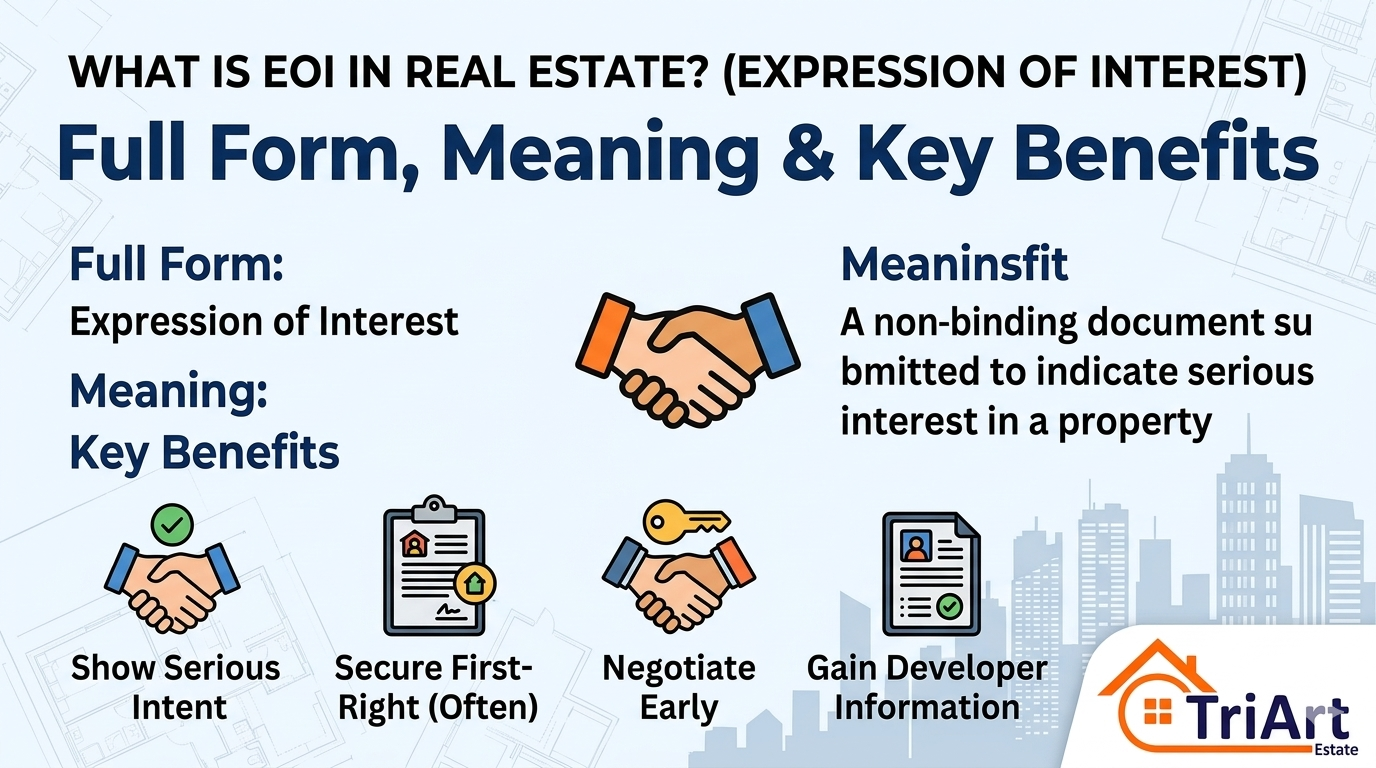
When buying or selling property, you may encounter the term EOI in the real estate sector—particularly when the transaction involves a high-value or highly competitive asset. EOI stands for ‘Expression of Interest.’ It is a process through which prospective buyers signal their interest in purchasing a property without entering into a formal, binding contract.
In real estate, EOIs are most commonly utilized for commercial properties, luxury residential properties, and off-market listings. This process provides the seller with an opportunity to gauge the price a buyer is willing to offer for the property. Buyers typically submit their ‘best offer,’ which outlines the proposed price as well as the associated payment terms and conditions.
What is an Expression of Interest?
In the context of real estate, it is a potential buyer expressing their interest in purchasing a property. It serves as an initial step through which buyers can signal their interest in a specific property; they are not required to make a firm commitment to purchase at this stage. An EOI provides buyers with a platform to demonstrate their seriousness. It also initiates a dialogue with the seller or the real estate agent.
EOIs are typically utilized in situations where the seller wishes to gauge the level of public interest in a property. They may do this before setting a price. This practice applies to “off-market” properties—those that are not openly advertised. Sellers may also employ this method when a property is in high demand and multiple parties have expressed interest in acquiring it. The process serves various purposes and offers several benefits.
Advantages of EOI
Submitting an EOI offers several advantages to potential buyers:
Early Access to Real Estate Opportunities
it provides buyers with the opportunity to access properties early—before they are officially listed on the market. This gives buyers a competitive advantage, allowing them to stay ahead of others in securing their desired property.
What are the Benefits of EOI
The real estate sector derives an additional benefit from an EOI, as it facilitates a smooth process for both parties to move forward. Furthermore, this letter provides an opportunity to gain a mutual understanding of expectations. Outlined below are some of the benefits, presented from the perspectives of both buyers and developers:
For Buyers:
- Informed Decision-Making: With an EOI, buyers have the opportunity to take their time before finalizing a deal with the developer. Furthermore, they can accurately gauge the property’s value over time.
- Facilitated Negotiation: A key advantage of an EOI is its “non-binding” nature, which allows buyers to initiate negotiations—potentially multiple times—without facing any pressure or obligation to purchase.
- Competitive Edge: By submitting an it, buyers can secure their position amidst the intense competition to acquire a property. Moreover, this demonstrates their commitment and seriousness regarding the entire process.
For Developers:
- Streamlined Process: With the aid, developers can identify serious buyers and organize their negotiation process far more effectively. They can filter out non-serious buyers and focus primarily on those who have submitted their Expression of Interest.
- Enhanced Market Insight: An Expression of Interest serves as a hidden boon for developers; it helps them gain a better understanding of market conditions and discern exactly what buyers are looking for.
- Structured Negotiation: Indeed, in the realm of real estate, it can certainly prove instrumental in refining the negotiation process. This document acts as a preliminary step, enabling developers to assess the situation and subsequently advance the negotiation process while taking into account flexible pricing, expectations, and other relevant factors.
Is an EOI Legally Binding?
In most cases, an EOI is not legally binding. Rather than confirming the purchase of a property, it merely indicates an interest in it.
Once the project is officially launched and the buyer decides to proceed, the next step typically involves paying the booking amount and signing a Sale Agreement. This is the stage at which the legal commitment begins.
Since the terms of an EOI may vary from one developer to another, buyers should always carefully review the terms before depositing any funds.
Is the EOI Amount Refundable?
In many projects, the EOI amount is refundable if the buyer decides against making a purchase or if the developer fails to allot a unit to them. However, refund policies may vary across different developers and projects.
Some developers offer a full refund if the buyer withdraws before booking, while others may convert the EOI amount into the booking amount once the buyer confirms the purchase.
For this reason, buyers should always verify the refund policy and the terms and conditions associated with the EOI payment.
When Should Buyers Submit an EOI?
Submitting an EOI (Expression of Interest) is a prudent step when a buyer has already conducted research regarding the developer, the project’s location, and the potential for price appreciation. This is particularly advantageous for projects that are expected to be in high demand or where the number of available units is limited.
However, buyers should refrain from submitting EOIs for projects that lack the necessary regulatory approvals or are being developed by a developer with an unreliable track record.
Conducting basic due diligence before expressing interest can help avoid unnecessary financial risks.
What Are the Drawbacks of an Expression of Interest (EOI)?
Although an ‘Expression of Interest‘ (EOI) offers tremendous benefits to both buyers and developers, it is equally important to consider the potential drawbacks associated with this process. Understanding the meaning of an EOI in real estate and actually proceeding with the process are, undoubtedly, two distinct matters. There are certain disadvantages associated with it as well.
- Potential Inconvenience During Negotiations: Since an EOI document does not contain specific pricing or terms related to the property, it can lead to significant confusion during the negotiation phase. Furthermore, the likelihood of misunderstandings arising between the buyer and the developer is quite high.
- Uncertainty: The reality is that the use of EOIs in real estate is fraught with considerable uncertainty, as it offers no guarantee of a purchase and fosters a lack of firm commitment between the two parties.
- Waste of Resources: For developers, such a situation may arise when numerous EOI holders fail to meet the stipulated expectations or pricing conditions and subsequently withdraw at the last minute. This scenario results in a wastage of both time and resources for the developers.
Conclusion
When intending to purchase a property, an ‘Expression of Interest‘ (EOI) stands out as one of the most effective approaches. It not only benefits buyers and investors but also offers an additional advantage to developers. From understanding its financial implications to grasping its underlying purpose, it plays a pivotal role in initiating the negotiation process. It serves as a powerful document that facilitates the streamlining of the process and aids in making well-informed decisions. By avoiding common pitfalls, investors or buyers can undoubtedly enhance the negotiation process and successfully close real estate deals with minimal risk. Thus, this document has significantly simplified and streamlined the transaction and purchasing processes within the real estate sector for buyers, developers, and investors alike.
Read more: Bengaluru Real Estate 2026: Growth Trends, Resale Demand & Investment