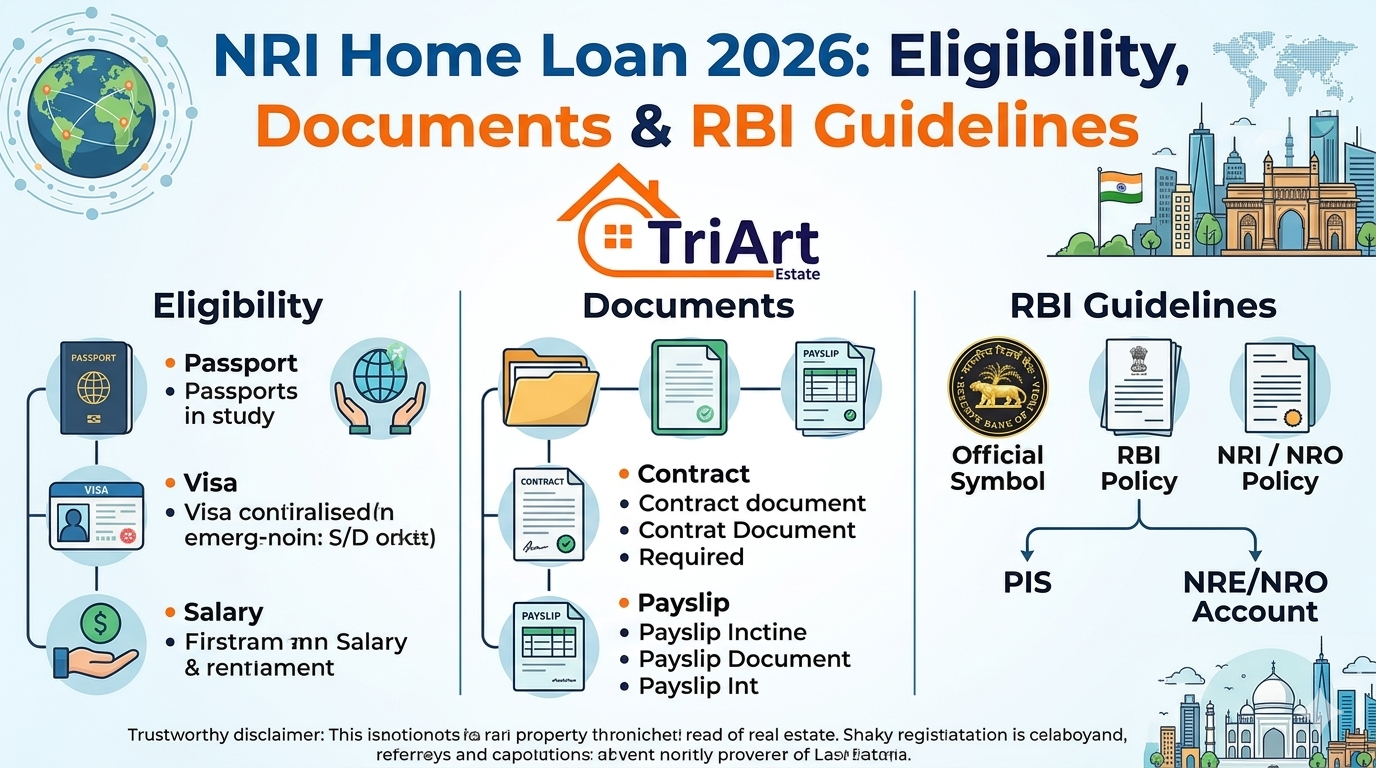
Are you considering investing in Indian real estate? Learn about NRI home loans, eligibility criteria, required documents, and RBI guidelines to secure financing for purchasing your own property in India.
For the Indian diaspora spread across the globe, NRI home loans serve as a primary avenue for reconnecting with their roots through prudent real estate investments. Whether driven by emotional ties or the tremendous growth in urban infrastructure within Tier-1 cities, you may feel a strong pull toward the Indian market. To meet this growing demand, banks have streamlined the lending process for Non-Resident Indians (NRIs).
Securing a home loan for NRI applicants operates within a structured legal framework that differs slightly from the lending norms applicable to residents living in India. Most Indian financial institutions offer digital application facilities, allowing you to initiate the process right from the country where you currently reside.
Eligibility Criteria for NRI Home Loans
Age
Your eligibility for an NRI property loan depends largely on your professional stability and age. Most lenders expect you to be at least 21 years old at the time of application. The upper age limit is typically around 60 years, or close to the designated retirement age in your country of residence abroad.
Employment Stability
To apply, you must hold a valid Indian passport or be an ‘Overseas Citizen of India‘ (OCI). Banks also require a total work experience of at least two years, of which at least one year must be with your current foreign organization.
Income Thresholds
Income thresholds play a crucial role in determining the maximum loan amount you are eligible to borrow. These limits depend on your place of residence (as the cost of living directly impacts your capacity to save). If you reside in the UK, the USA, or the UAE, the minimum monthly income requirements in these regions may be higher compared to other locations.
Your educational background also holds significant weight. Professionals holding postgraduate degrees or technical certifications often find the NRI home loan approval process to be considerably faster, as banks perceive them as posing a lower risk of default.
Essential Documentation for NRI Home Loan Approval
Identity and Financial Records
To avoid unnecessary delays in the approval of your NRI home loan, you will require specific documents. Start with your KYC kit, which includes a copy of your valid passport and your work permit. If you hold a foreign passport, you must also submit your OCI or PIO card. For financial verification, you will need to provide your foreign bank statements for the past six months, reflecting your salary credits. Additionally, you must submit statements for your NRE and NRO accounts held in India.
Tax and Employment Proof
Lenders will request your salary slips for the past three months as well as your current employment contract. For tax verification purposes, you must submit tax returns from your country of residence. If you have any active sources of income in India, submitting Form 16 is mandatory to establish a comprehensive credit profile.
Understanding the Financial Mechanics of NRI Home Loans
LTV Ratios and Repayment Channels
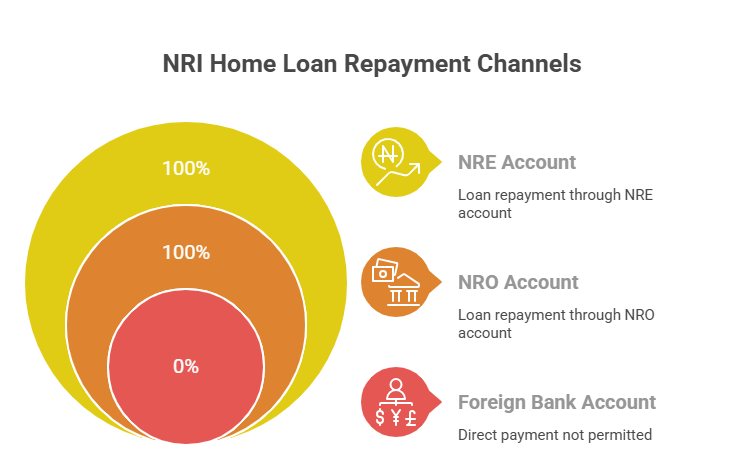
For property purchases by NRIs, the maximum Loan-to-Value (LTV) ratio for a home loan typically ranges between 75% and 90%. This implies that you must contribute 10% to 25% of the property’s value as a down payment using your own funds. Loan repayment must be made through monthly installments (EMIs) debited from your NRE or NRO account. Under current regulations, making direct payments to the lending institution from a foreign bank account is generally not permitted.
NRI Home Loan Interest Rates and Fees
For an NRI home loan, you can choose between fixed and floating interest rates. Floating rates are more popular as they fluctuate in response to market dynamics and the Central Bank’s policies. Processing fees typically range from 0.50% to 2% of the loan amount. During the processing of an NRI home loan, you may also be required to pay legal and technical valuation charges. Regarding the tenure and limits of NRI home loans, the repayment period typically ranges from 5 to 15 years, which is shorter than the 30-year limit generally offered to residents living within the country.
The Role of the Power of Attorney (PoA)
Since you reside abroad, you will require a local representative to handle the paperwork and formalities in India. This is where a ‘Power of Attorney’ (PoA) becomes essential. A ‘Specific PoA’ is preferable to a ‘General PoA,’ as it limits the representative’s authority solely to tasks related to the loan. Before sending the PoA document to India for final registration, you must have it ‘notarized’ in your country of residence or have it ‘attested’ by the Indian Embassy. Here are some key regulatory and legal considerations you should keep in mind:
FEMA & Property Types
The RBI regulations for NRI home loans fall under the ‘Foreign Exchange Management Act’ (FEMA). You are permitted to purchase residential or commercial properties without any special permission. However, you cannot purchase agricultural land, farmhouses, or plantation properties in India.
Tax Benefits for Non-Residents
The tax benefits available on NRI home loans prove to be a significant advantage for your portfolio. Under Section 24, you can claim a deduction of up to ₹2 lakh on interest payments. Under Section 80C, a deduction of up to ₹1.5 lakh is permitted on the repayment of the principal amount. These benefits are applicable only if you file your income tax returns in India and have taxable income there.
Conclusion on NRI Home Loans
The secret to stress-free shopping in the Indian market lies in planning your finances. Always ensure that you verify the stamp duty and registration regulations applicable in your state. For any NRI, purchasing a home in India is a monumental achievement. With the right NRI home loan, you can secure your future while staying connected to your homeland.
Read more: Plot Loan Eligibility 2026: Criteria, Documents & Tips