In the bustling world of real estate and banking, various financial tools help both individuals and businesses maximise the value of their assets. One such tool, which has gained considerable popularity in India, is ‘Lease Rental Discounting’ (LRD). But what, exactly, is LRD?
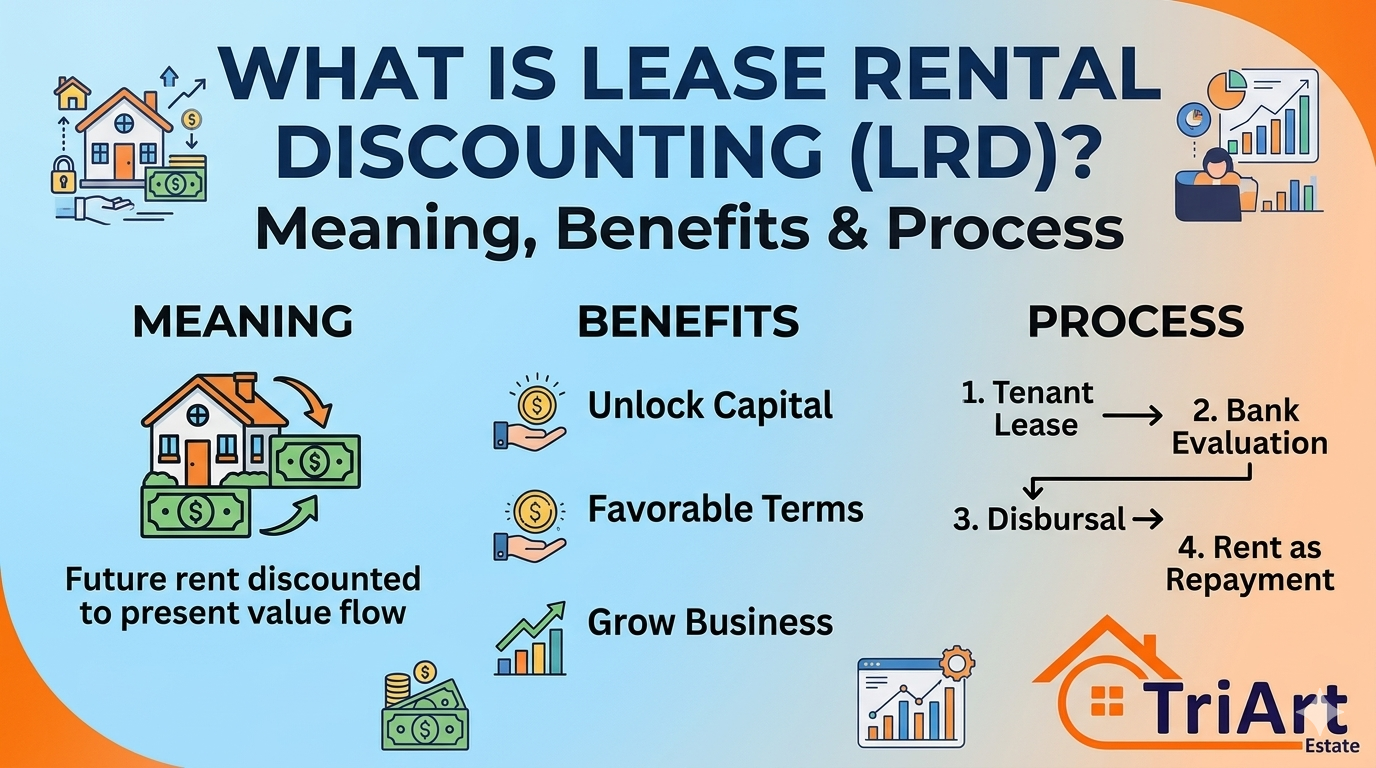
In simple terms, an LRD is a loan granted against the rental receipts generated from leasing out your property to tenants.
In this comprehensive guide, we will delve into the full form of LRD, the meaning of ‘Lease Rental Discounting’ in the context of banking, its benefits, eligibility criteria, application process, and much more. Whether you own a property, are a prospective lessee, or are simply curious to understand how a property is leased to a bank, this article will prove to be an invaluable source of information for you.
Understanding Lease Rental Discounting
Lease Rental Discounting is a type of loan granted against the rental income generated from a leased property. Financial institutions, such as , assess the future rental income of the property and sanction a loan based on that assessment. This mechanism proves beneficial for property owners, as it converts their regular rental income into immediate liquidity.
For instance, Ms. Tina, the owner of a shopping complex in Delhi, utilized Lease Rental Discounting (LRD) to raise funds for the renovation of her property. By pledging her future rental income as collateral, she secured a loan that enabled her to upgrade the complex, attract better tenants, and, consequently, boost her rental earnings.
How to Avail LRD?
The process of lease rental discounting involves several key stages:
- Property Valuation: The financial institution evaluates your property to determine its current market value and potential rental income.
- Tenant Verification: The financial stability and reliability of your tenants are reviewed to ensure that they are capable of paying rent on a regular basis.
- Loan Approval: Based on the property’s value and potential rental income, the financial institution determines the loan amount—which typically constitutes a portion of the property’s total value.
- Legal Documentation: Necessary legal documents are prepared and executed, detailing the terms and conditions of the loan.
- Fund Disbursement: Once all documentation is complete, the approved loan amount is transferred to the property owner.
Advantages of Lease Rental Discounting
Opting for lease rental discounting offers numerous benefits:
- Immediate Access to Funds:LRD enables property owners to receive a lump sum amount based on their future rental income. This immediate cash can be utilized for various purposes, such as business expansion, property repairs, or personal expenses.
- Retain Property Ownership: LRD loans are secured against rental income; therefore, financial institutions often offer them at lower interest rates compared to unsecured loans. This makes them an affordable financing option for property owners.
- Competitive Interest Rates: LRD loans are secured against rental income; therefore, financial institutions often offer them at lower interest rates compared to unsecured loans. This makes them an affordable financing option for property owners.
- Flexible Repayment Terms: The repayment schedules for LRD loans are typically aligned with the cycles of rental income. This makes it easier for property owners to manage their finances and also ensures that the loan repayment does not place a burden on the owner’s cash flow.
Take the example of Ms Ananya Verma, who owned a warehouse in Indore. By judiciously leveraging the benefits of LRD, she secured funds to scale up her business operations—all while retaining ownership of her property.
Comparison with Other Financing Options
When evaluating various financing options, it is crucial to understand the comparative standing of ‘Lease Rental Discounting.’
| Aspect | Lease Rental Discounting | Traditional Mortgage Loan | Personal Loan |
| Collateral | Rental income from leased property | Property itself | Often unsecured |
| Interest Rates | Competitive, due to secured rental income | Varies, based on property value | Higher, due to lack of collateral |
| Loan Amount | Based on future rental income | Based on the property’s market value | Limited, based on the individual’s creditworthiness |
| Repayment Source | Rental income | Personal income or rental income | Personal income |
Legal Considerations in Lease Rental Discounting
It is essential to pay attention to the legal aspects when engaging in lease rental discounting.
- Clear Property Title: Ensure that the property title is clear and marketable.
- Registered Lease Agreement: It is mandatory to have a legally binding lease agreement with the tenants.
- Tenant Consent: Some financial institutions require the tenant’s consent regarding the loan arrangement.
- Compliance with Local Laws: Adherence to regional property and tenancy regulations is of utmost importance.
Future Trends in Lease Rental Discounting
The significance of LRD in India’s real estate financing landscape is steadily increasing. As the demand for high-quality commercial spaces backed by reliable rental income continues to rise, the LRD market is also expected to grow. This will enable property owners and developers to access funds with ease, thereby facilitating their business expansion and project development efforts.
The Indian leasing market is continuously evolving; new companies are entering the space, and a wider variety of properties are now being offered on lease. This shift has occurred because leasing has come to be recognized as a viable financing option.
Furthermore, the banking and financial services sector is playing a pivotal role in the development of the real estate sector by providing financing options such as mortgage products, construction loans, and insurance. These services streamline every real estate transaction at every stage, thereby further boosting the utilization of LRD.
Conclusion
Lease Rental Discounting is a strategic financial instrument for property owners who wish to leverage their rental income without relinquishing ownership of their property. By understanding its processes, benefits, and legal aspects—and by partnering with reputable institutions—individuals can effectively utilize the potential of their property to fulfill their various financial goals.
Read more: Mukhyamantri Awas Yojana Haryana 2026: Gramin and Shehri Benefits,