

Property ownership is one of the most crucial elements when it comes to the transactions of real estate in India. It would be great to learn about the types of property ownership in India, the types of land in India, and what all legal documents are required to prove ownership. This article explores the ownership of land in the Land Law, distribution of land ownership in India, and then outlines the most common forms of property ownership types such as freehold and leasehold. Let’s delve into these concepts and their legal implications for potential land owners and investors in India.
Types of Property Ownership in India
Property ownership in India is of various kinds and this depends on the rights of different forms. The common types of property ownership in India include :
- Freehold Ownership: The owner enjoys all the rights over the property absolutely and completely in this form of ownership. He is at liberty to sell, transfer, or even lease the property. There is no time limit in this regard on the owner’s ownership. Freehold ownership is more in demand as the owner enjoys full control over the land and building.
- Leasehold Ownership: In this form of ownership, the owner has possession and use of the subject land for a specified duration. It is usually considered a long-term lease, such as 99 years. Upon expiration of the lease period, ownership either revests with the original owner or is renewed upon terms.
- Cooperative Ownership: This is largely applicable in housing societies wherein the members of a society collectively own shares that hold the legal title of the property. Ownership of land lies not with an individual but collectively with the society.
- Joint Ownership: A property can be jointly owned by multiple individuals. Each individual may hold an undivided or defined share, and decisions concerning the property are arrived at collectively, based on the agreement.
- Condominium Ownership: This is a situation whereby people own units of property, such as apartments, but commonly owned is the hallways, elevators, and parking.
Types of Property Ownership in India
| Ownership Type | Description |
| Freehold | Full and indefinite ownership of the land and property. |
| Leasehold | Ownership for a fixed period, after which it reverts to the original owner. |
| Cooperative | Ownership through shares in a housing society. |
| Joint Ownership | Shared ownership by multiple individuals. |
| Condominium | Ownership of individual units with shared common areas. |
5 Types of Land in India
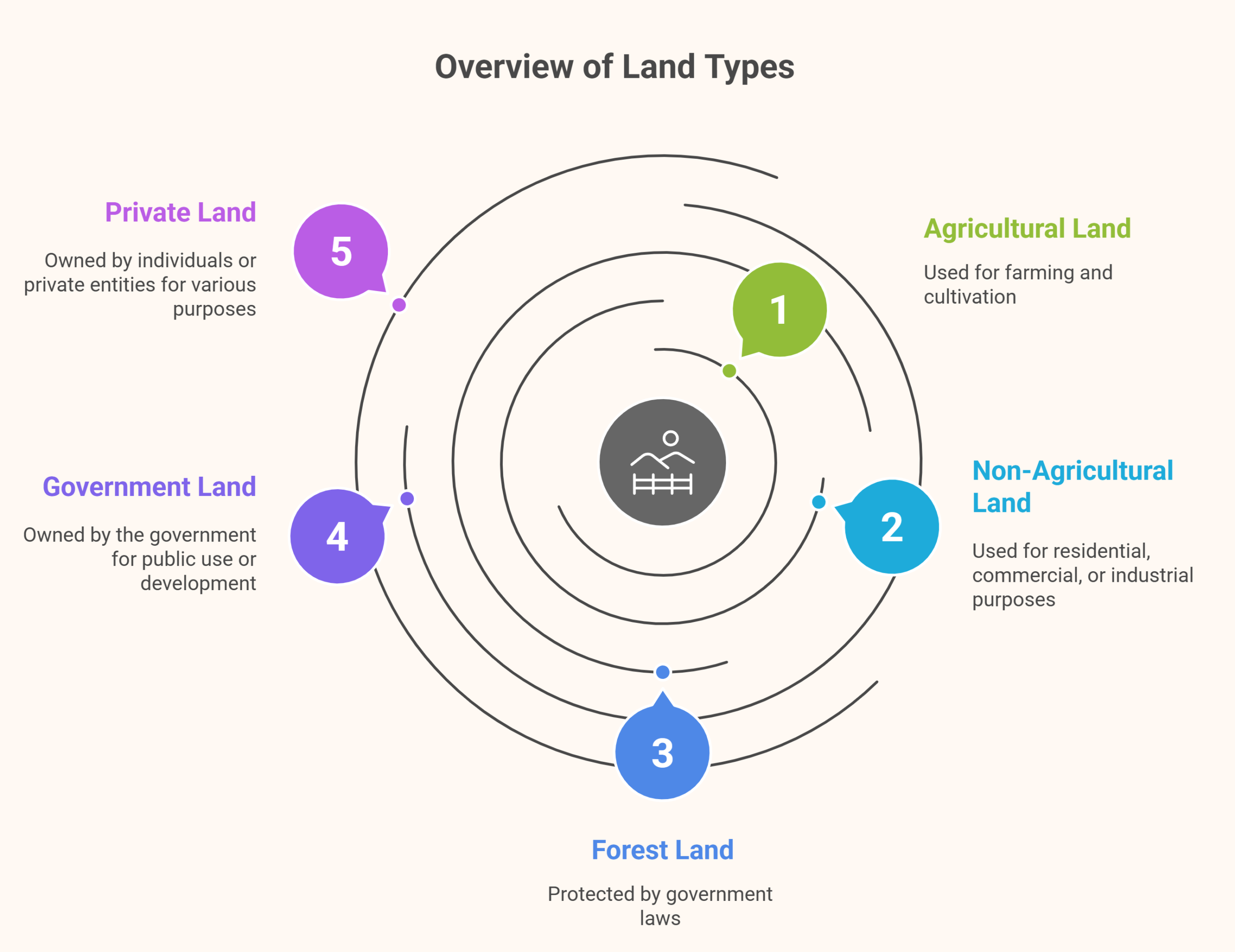
Land in India is classified based on its usage and ownership. The following are the 5 types of land in India:
- Agricultural Land: Land used primarily for farming and cultivation. This type of land often has restrictions on its sale or transfer to non-farmers.
- Non-Agricultural Land: Land used for purposes other than farming, such as residential, commercial, or industrial purposes.
- Forest Land: Land designated for the protection of forests. It is usually controlled by the government and is protected by forest laws.
- Government Land: Land owned by the government, typically used for public infrastructure, parks, or governmental offices.
- Private Land: Land owned by private individuals or entities for personal, commercial, or industrial use.
Types of Land in India
| Type of Land | Description |
| Agricultural Land | Used for farming and cultivation activities. |
| Non-Agricultural Land | Used for residential, commercial, or industrial purposes. |
| Forest Land | Protected by government laws, designated as forest. |
| Government Land | Owned by the government for public use or development. |
| Private Land | Owned by individuals or private entities for various purposes. |
Ownership of Property Documents
When purchasing property in India, several ownership of property documents are required to establish the legitimacy of the transaction. These documents include:
- Title Deed: This is the most important document, proving that the buyer has legal ownership of the property. It contains details of the seller, buyer, and the property’s legal history.
- Sale Agreement: This document details the terms and conditions of the property sale, including the agreed price, payment terms, and timelines for transfer of ownership.
- Encumbrance Certificate: An essential document confirming that the property is free from any legal liabilities such as unpaid loans, taxes, or legal disputes.
- Possession Certificate: A document issued by the local authorities or the seller, confirming that the buyer has taken possession of the property.
- Land Use Certificate: This certificate ensures that the land can be used for its intended purpose (e.g., residential, commercial, agricultural, etc.).
Ownership of Property Documents
Document | Description |
Title Deed | Legal proof of ownership and transfer of rights. |
Sale Agreement | Contract outlining the terms of the sale transaction. |
Encumbrance Certificate | Confirms that the property is free from legal issues. |
Possession Certificate | Confirms the buyer’s physical possession of the property. |
Land Use Certificate | Verifies permissible use of the land (e.g., residential, commercial). |
Ownership of Land in Land Law
The ownership of land in land law in India is governed by various legal frameworks, including:
- The Transfer of Property Act (1882): This Act lays down the rules for the transfer of property and defines various forms of ownership and rights related to land.
- The Indian Easements Act (1882): This Act governs the rights of individuals who use another person’s land for specific purposes, such as access roads or water supply.
- Land Ceiling Laws: These laws limit the amount of agricultural land that one individual or family can own to prevent large-scale land monopolies.
- The Land Acquisition Act (1894): This Act allows the government to acquire land for public purposes, ensuring that proper compensation is paid to the landowners.
The ownership of land involves various rights such as the right to sell, transfer, lease, or bequeath land, but these rights are subject to specific laws and regulations aimed at preventing exploitation and promoting equitable land distribution.
Distribution of Land Ownership in India
The distribution of land ownership in India is highly uneven. Historically, land ownership was concentrated in the hands of a few landlords or zamindars, but post-independence land reforms aimed at redistributing land have had mixed results. Today:
- A significant portion of land is still controlled by large landowners or government bodies.
- Many farmers own small and fragmented land holdings, limiting their capacity for large-scale agricultural production.
- In urban areas, land ownership is dominated by real estate developers, wealthy individuals, and the government.
Efforts to address these disparities include land ceiling laws, land redistribution programs, and regulations designed to protect farmers’ rights to their land.
Types of Property Ownership: Freehold vs Leasehold
When exploring ownership of land in India, it is crucial to understand the distinction between freehold and leasehold property ownership:
- Freehold Ownership: The most desirable and common form of ownership, providing full rights over the land indefinitely. The property owner can use, lease, or sell the property without restrictions.
- Leasehold Ownership: In a leasehold agreement, the property is leased for a fixed number of years. After the lease term ends, ownership reverts back to the original landowner, unless the lease is renewed.
Freehold vs Leasehold Ownership
Ownership Type | Characteristics |
Freehold | Permanent and unrestricted ownership of land and property. |
Leasehold | Ownership for a specific period, after which the property returns to the original owner. |
Read More: Property Maintenance
Read More: A Complete Guide to Property Taxes in India
FAQ (Frequently Asked Questions)
Ques. What is the difference between freehold and leasehold ownership?
Ans. Freehold ownership offers permanent and unrestricted ownership of the property, while leasehold ownership is limited to a fixed period, after which ownership reverts to the original landowner.
Ques. What documents are required to prove property ownership in India?
Ans. Key documents include the title deed, sale agreement, encumbrance certificate, possession certificate, and land use certificate.
Ques. Can agricultural land be sold to non-farmers in India?
Ans. In many states, agricultural land can only be sold to individuals who are engaged in farming. There are restrictions in place to protect farmers and prevent the conversion of agricultural land into non-agricultural uses.
Ques. What is an encumbrance certificate, and why is it important?
Ans. An encumbrance certificate is a vital document that proves the property is free from legal encumbrances, such as mortgages or unresolved legal disputes. It is necessary when transferring property ownership.



Join The Discussion